Byline: Ary Medical Equipment Specialist
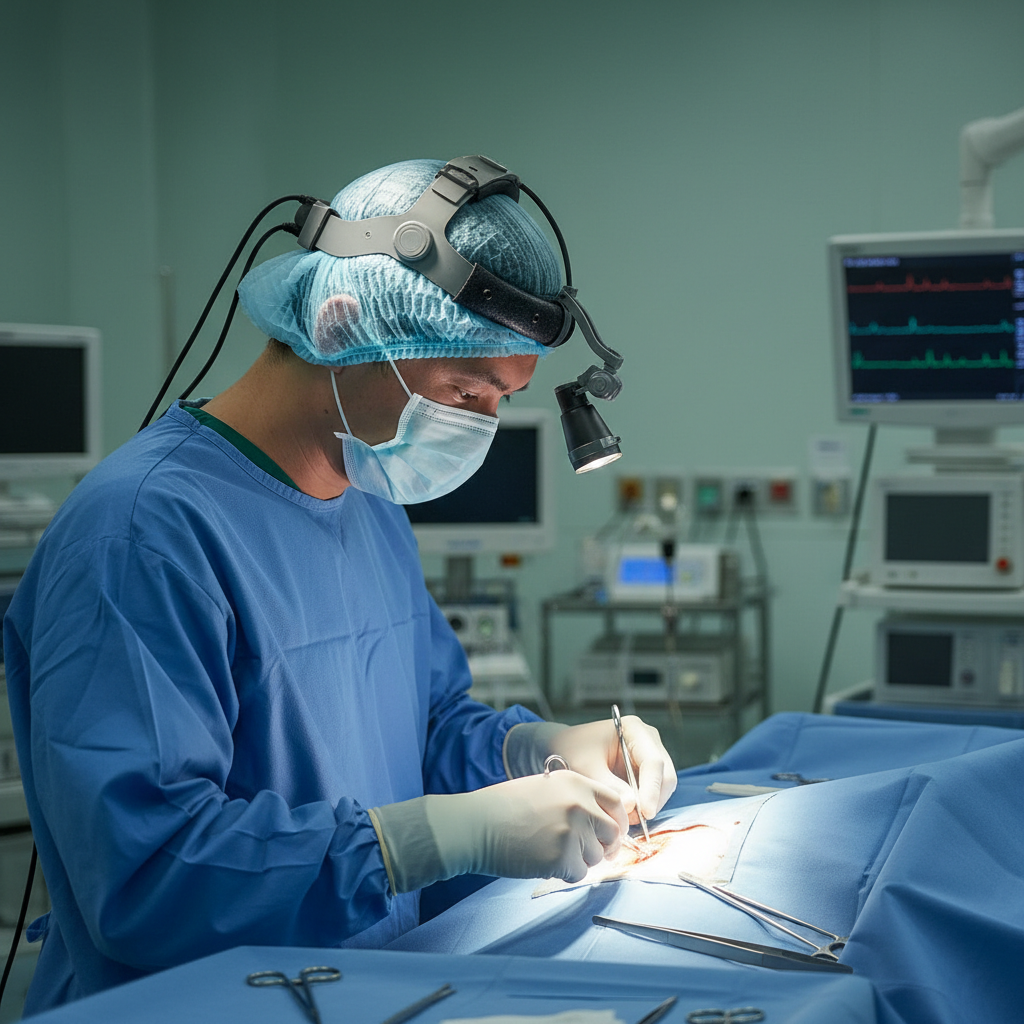
It’s minute 180 of a complex resection. You reach deep into the cavity to isolate a vessel, but just as you need critical visibility, a shadow eclipses your target. You crane your neck, breaking your neutral posture just to get a clear view.
Sound familiar?
Every surgeon, dentist, and veterinarian knows the frustration of inadequate light mid-procedure. That split-second hesitation doesn’t just kill your flow; it compromises patient safety and accelerates your own physical fatigue. In the high-stakes environment of the operating room, where millimeter-level precision differentiates a successful outcome from a complication, your visualization tools are just as critical as your scalpel.
As professionals, we know that standard overhead operating theater lighting often fails when precision matters most. It casts shadows when your head moves, and it rarely penetrates deep, narrow cavities effectively. Upgrading isn’t just about buying a brighter torch; it’s about safeguarding your career against eye fatigue and chronic cervical strain. True visual acuity requires equipment designed with strict photobiological safety to protect delicate tissue and precise control over beam divergence to ensure your light lands exactly where your eyes focus.
Whether you are a procurement manager evaluating a hospital-wide upgrade or a specialist looking for a personal unit, the gear you wear determines your accuracy. Let’s cut through the marketing noise and illuminate the specific medical headlamp features that actually make a difference in the OR.
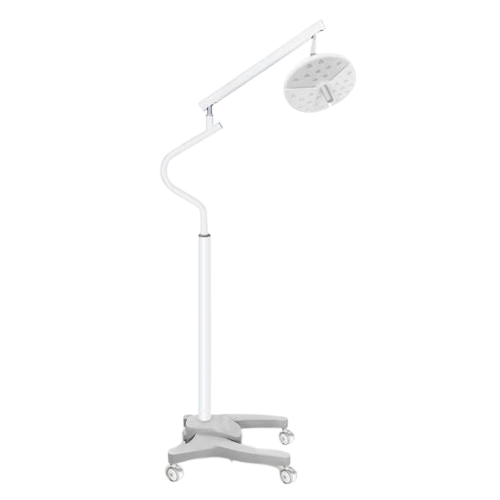
For a broad overview of available technologies before we dive deep, you can explore our complete guide to surgical lighting solutions .
I. Executive Summary: The 30-Second Diagnosis
For the busy procurement manager or surgeon needing immediate answers.
If you are skimming this procurement guide for medical lighting between cases, here is what matters most. We have analyzed the market trends and clinical requirements to distill the decision-making process down to three critical pillars.
- The “Cheat Sheet” Answer: Do not get distracted by raw brightness specifications alone. High lumen counts are often marketing fluff if the optics are poor. The three non-negotiable features for professional use are CRI > 90 (for accurate tissue differentiation), Weight Balance (to prevent neck injury), and Hot-Swappable Batteries (for uninterrupted workflow).
- The Bottom Line: Upgrading from a standard clinical light to a dedicated LED medical light for surgery reduces procedure time, minimizes error rates caused by poor visualization, and significantly lowers surgeon fatigue.
- Quick Recommendation: Choose cordless surgical lights for procedures under 3 hours or for high-mobility fields like dentistry and ENT. Opt for tethered belt-packs for marathon surgeries (neuro/cardio/transplant) where even minimal battery weight on the head becomes a liability over 6+ hours.
II. The Physics of Precision: Understanding Light Quality
When browsing a medical headlamp buying guide, the most common pitfall is assuming “brighter is better.” In reality, blinding brightness often leads to “washout”—the inability to see texture on wet tissue due to glare. To make an informed decision, we must look at the physics of light through a clinical lens.
The Truth About Brightness: Lux vs. Control
Lighting intensity is measured in Lux. However, raw power is useless without control. While a search and rescue light needs to throw a beam 100 meters, a surgical lighting solution needs to illuminate a 10cm to 15cm spot perfectly at a working distance of 40cm (the typical focal distance for most surgeons).
- Dental/Minor Procedures: 20,000 – 40,000 Lux is often sufficient. Excessive brightness here causes rapid eye strain due to high reflection from enamel and metallic instruments.
- General Surgery: 40,000 – 80,000 Lux. This provides enough power to illuminate the abdominal cavity without causing glare on the surrounding drapes.
- Deep Cavity (Neuro/Spine): 100,000 – 160,000 Lux. This intensity is required to punch through the darkness of a deep incision where overhead lights cannot reach. The light must fight the inverse square law, maintaining intensity even as the distance increases slightly.
True Color: Why High CRI is Critical
This is the most overlooked metric in medical grade headlamp specifications. The Color Rendering Index (CRI) measures a light source’s ability to reveal the true colors of an object compared to natural sunlight (which is CRI 100).
Why does this matter? If you are performing vascular surgery or oncology resections, you are relying on subtle color variations to distinguish nerve from vessel, or healthy tissue from necrotic tissue.
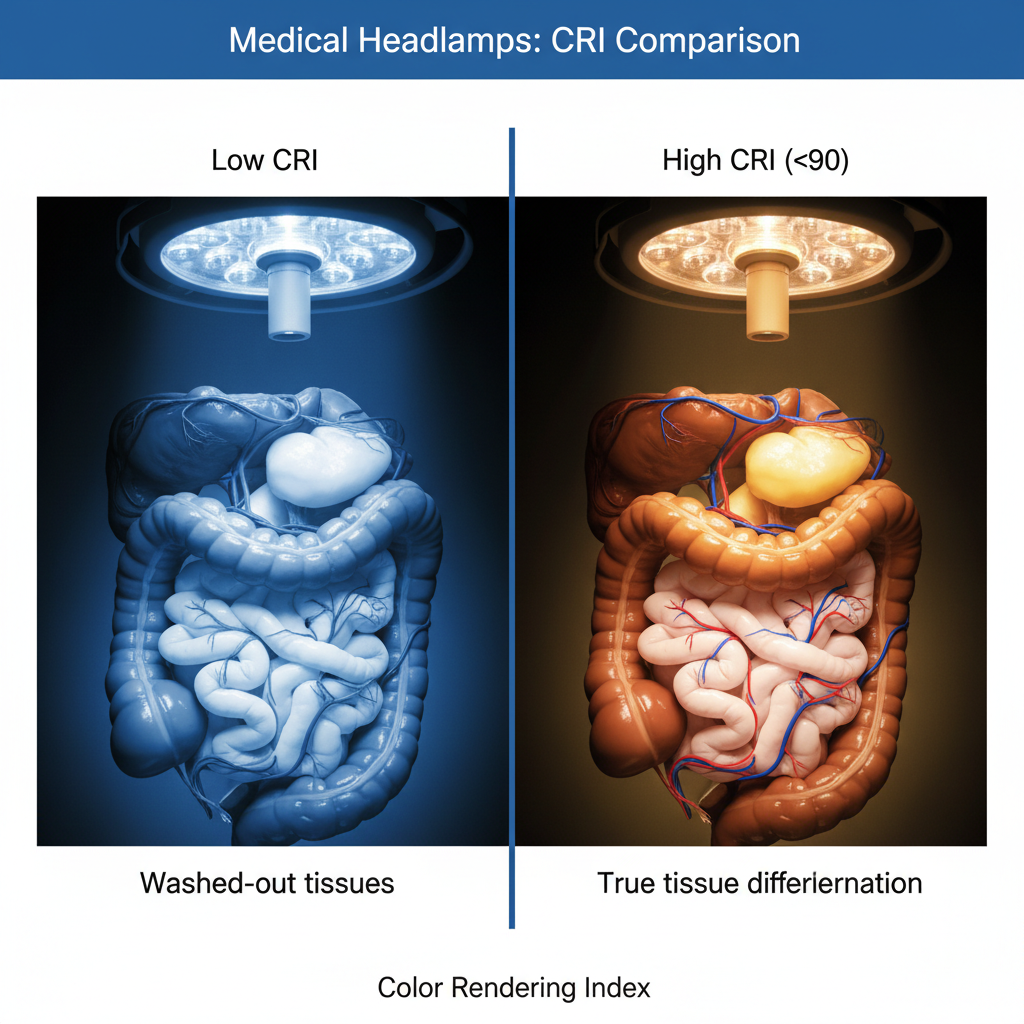
- Low CRI (< 80): Tissues look washed out, grey, or uniformly red. This forces the brain to work harder to interpret visual data, leading to cognitive fatigue. You may miss the subtle pallor of ischemic tissue.
- High CRI (> 90): This is the standard for top rated medical headlamps. It provides optical clarity, ensuring that reds, pinks, and purples look distinct. Specifically, look for a high R9 value (the rendering of saturated red), which is critical for blood-rich environments. A light can have a high overall CRI but a low R9, making it unsuitable for surgery.
Color Temperature: The Kelvin Scale
Have you ever noticed how some lights look yellow while others look blue? This is Color Temperature.
- Warm White (3000K – 4000K): Easier on the eyes for long durations but may yellow the tissue appearance, potentially masking jaundice or infection.
- Daylight/Cool White (5000K – 5700K): The standard for color temperature medical lights. This mimics bright noon sunlight, increasing contrast and alertness.
- The Blue Light Hazard: Be wary of cheap LEDs pushing 6500K+ (bluish tint). While they appear “brighter,” high-energy blue light can be damaging to the retina over long-term exposure and causes higher glare on wet surfaces.
Beam Uniformity and Edge-to-Edge Clarity
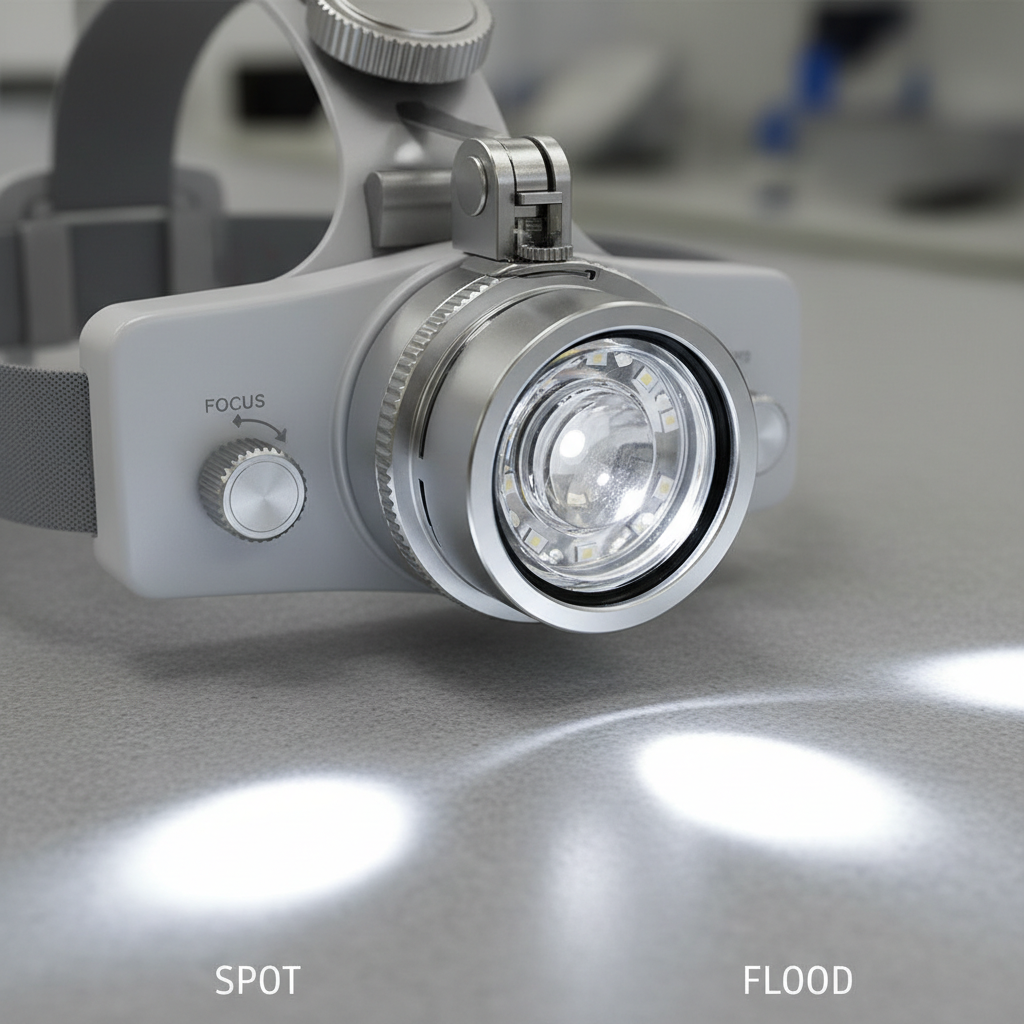
An adjustable focus surgical headlamp must provide a clean, uniform spot. Inferior lights suffer from a “hot center” (too bright in the middle) and a yellow, dim halo at the edges. This forces you to constantly move your head to keep the center of the beam on your suture needle, leading to unnecessary cervical motion.
You need edge-to-edge clarity—a perfectly even circle of light. This allows you to view the entire surgical site (the “field of view”) without moving your neck, maintaining better posture. High-quality optics use multi-element lens systems to collimate the light, ensuring the spot remains crisp regardless of the spot size setting.
III. Ergonomics and Form Factor: Protecting Your Neck
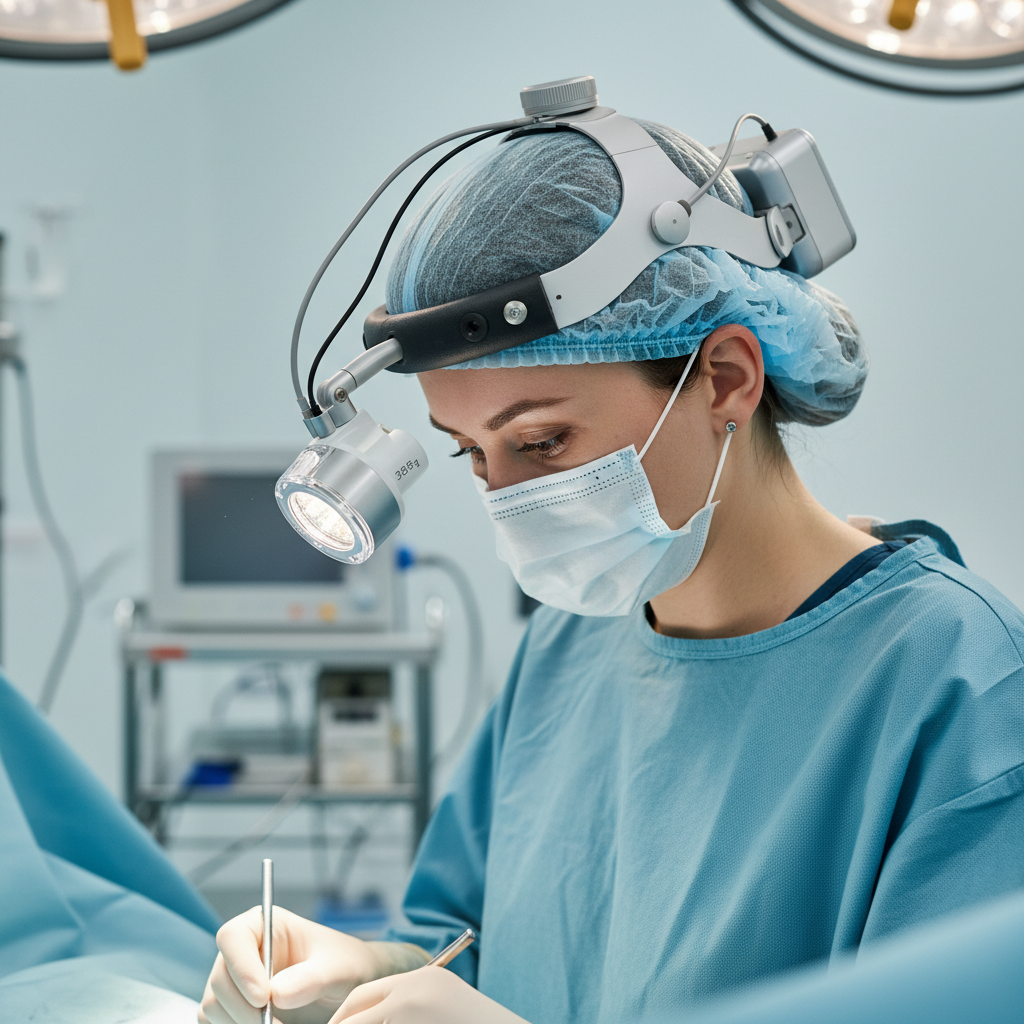
Medical headlamp ergonomics are not a luxury; they are an occupational health requirement. The average human head weighs about 10-11 pounds. Adding a heavy, unbalanced light creates a cantilever effect that can lead to chronic cervical disk issues over a 20-year career. Even an extra 50 grams, if placed too far forward on the forehead, increases the torque on your C-spine significantly.
The Weight Equation
Ideally, a lightweight surgical headlamp should weigh under 400g (including the headband). But distribution matters more than total weight.
- Headband Style: This provides maximum stability. Look for dual-adjustment points (top and back) to distribute the weight across the cranium rather than clamping it onto the forehead like a vise. A “crown” support system reduces pressure headaches during long cases.
- Loupe-Mounted: The lightest option, but requires your loupes to fit perfectly. If the light is too heavy, it will drag your glasses down your nose, ruining your focal point and compromising your optical alignment.
- Coaxial Illumination: This feature ensures the light source aligns parallel to your line of sight. This is non-negotiable for dental examination headlamp requirements and ENT surgical headlamp features, as it eliminates shadows cast by the surgeon’s own hands or tools. If the light is mounted too high on the forehead, your nose or hands will cast shadows into the deep cavity you are trying to view.
Wire-Free vs. Belt Packs
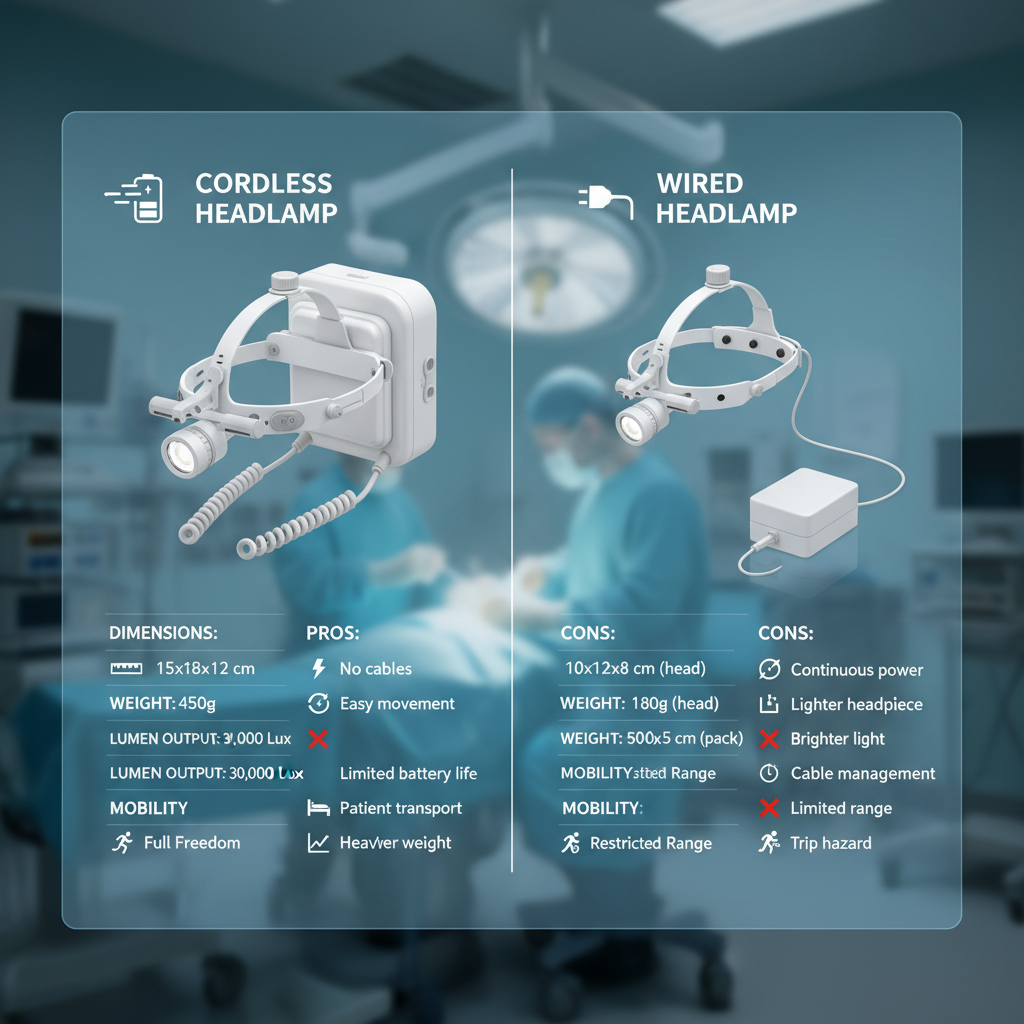
The debate between cordless medical headlamp options and belt-pack systems often comes down to procedure length and mobility.
- Integrated Wireless: The battery is built into the headset (often at the back of the head).
- Pros: Zero cords, total freedom of movement. No snagging hazards. Great for teaching rounds or multi-room practices.
- Cons: Slightly heavier on the head. Requires disciplined charging routines.
- Belt-Pack Systems: The battery is clipped to the waist, connected by a fiber optic or power cord.
- Pros: Takes weight off the head (the light source is tiny), generally longer battery life.
- Cons: The “tether” can get snagged on armrests or door handles. You are physically attached to the battery pack.
IV. Powering Through: Technology and Reliability
The industry is rapidly shifting toward cordless medical headlamp options. The days of being tethered to a fiber-optic light box by a heavy cable are fading, replaced by high-efficiency LEDs. But not all batteries are created equal, and “runtime anxiety” is a real concern for surgeons.
The Wireless Advantage
For high-mobility specialties, such as dentistry, plastic surgery, or ER trauma response, wireless medical headlamps are a game-changer. They eliminate the trip hazard of cords and allow you to move around the patient freely to check different angles.
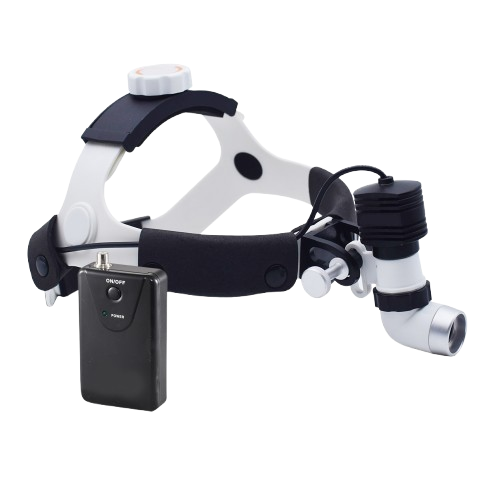
- Integration: Modern units, like the Ary Medical KD-205AY-2 , integrate the battery seamlessly into the headband. This offers a balanced center of gravity—the battery weight at the back counters the light weight at the front—preventing the unit from slipping forward when you look down.
Battery Life and Management
A common fear is the light dying mid-procedure. To mitigate this, look for medical headlamp battery life comparison data that specifies “run time at full intensity,” not just on the dimmest setting.
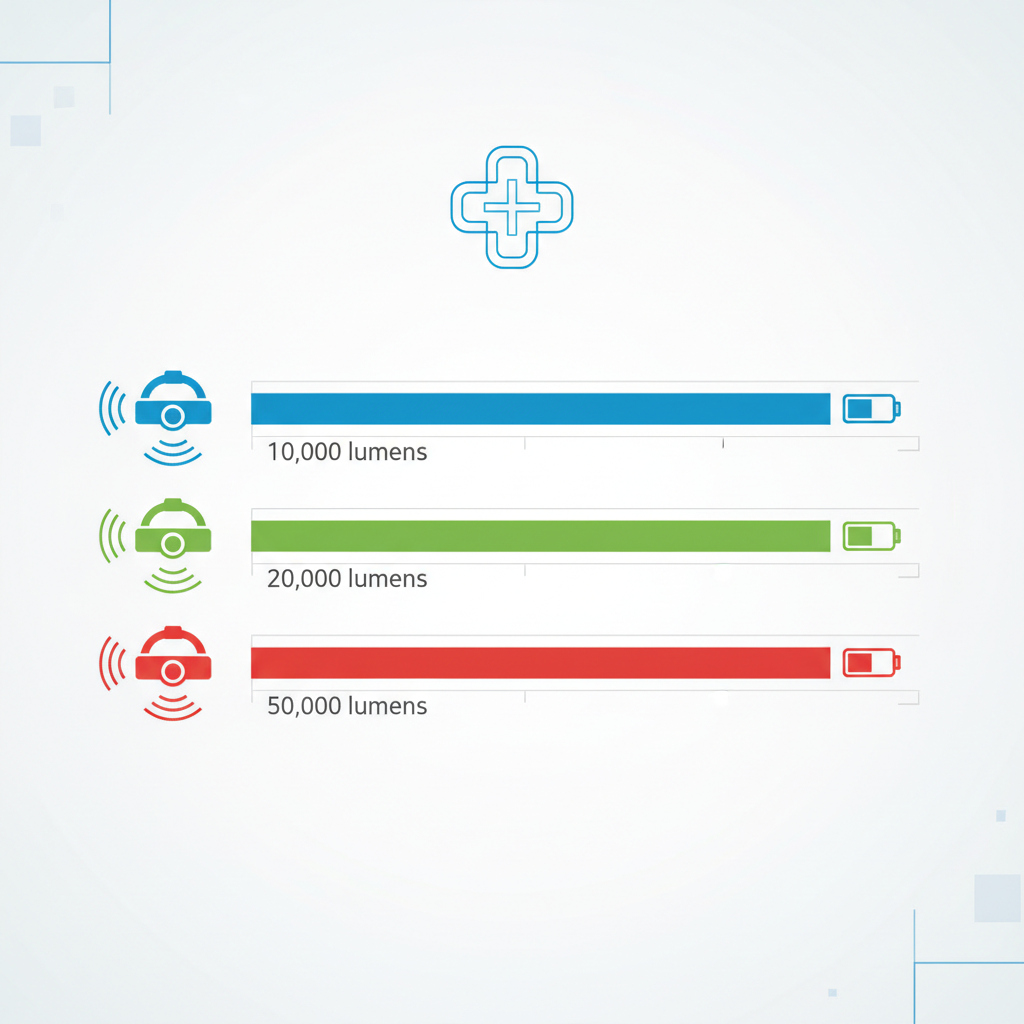
- Standard Run Time: Most rechargeable medical headlamps offer 3–4 hours at high intensity.
- The “Hot-Swap” Capability: This is a crucial feature for surgical equipment features guides. It allows you to swap a depleted battery for a fresh one without the light ever turning off. This capability is essential for long cases and is a key feature of advanced models like the Ary Medical KD-205AY-1 . This technology usually employs a small internal capacitor or secondary cell to keep the light running for the 10 seconds it takes to switch the main pack.
- Charge Cycles: High-quality Lithium-Ion cells should retain 80% capacity after 500 charge cycles. Cheaper units often degrade after 100 cycles, becoming e-waste. Look for batteries with overcharge protection to ensure safety during overnight charging.
V. Durability and Hygiene: Clinical Suitability
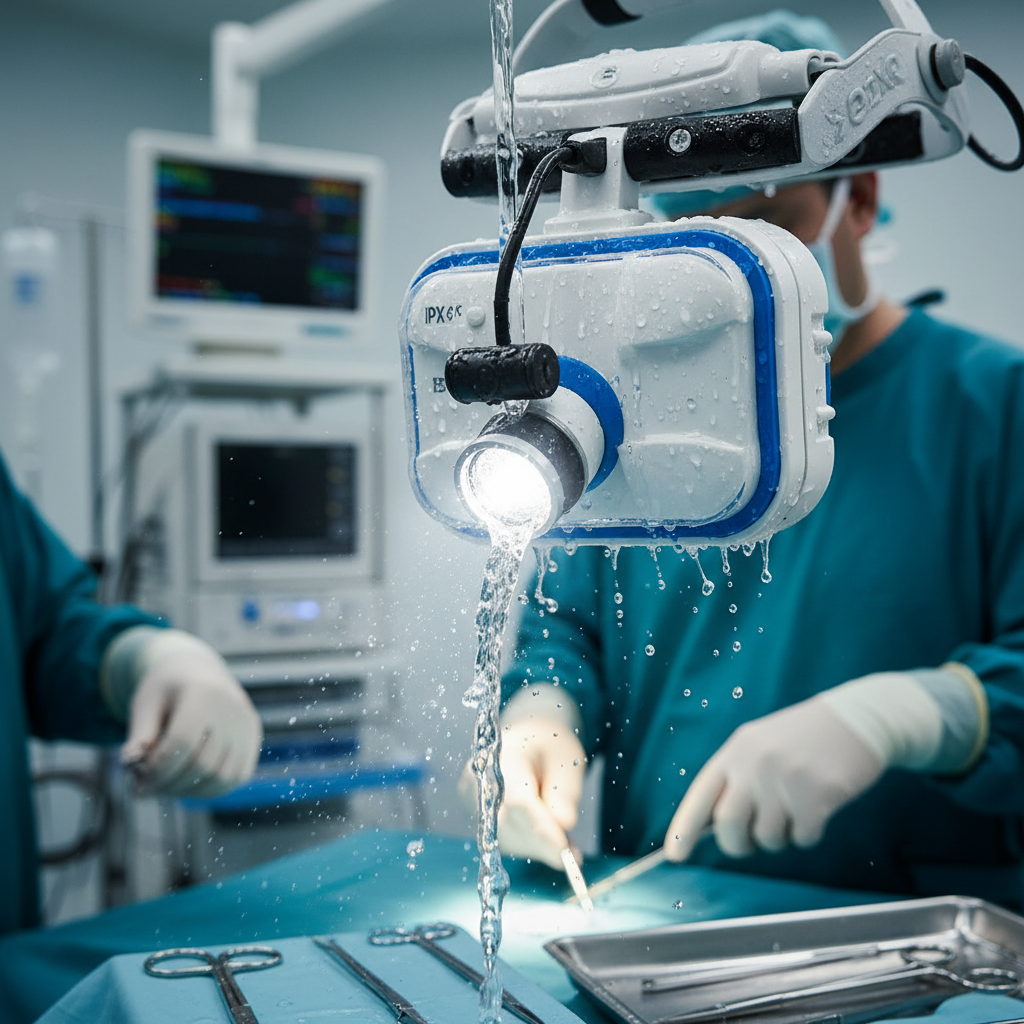
Medical accessory lighting must survive the “kill zone”—the harsh environment of the operating room. It encounters blood, saline, Betadine, and aggressive cleaning agents daily. A consumer-grade hiking headlamp will fail within weeks in this environment.
Waterproof and Durability
Waterproof surgical headlamp benefits extend beyond just accidental splashes.
- Sterilization Compatibility: High IP ratings (Ingress Protection) mean the unit can withstand rigorous wipe-downs with CaviWipes, alcohol-based disinfectants, or quaternary ammonium compounds without fluid seeping into the electronics. Look for IPX4 (splash proof) or higher.
- Physical Resilience: Medical grade headlamp specifications should list resistance to impact. In a busy OR, gear gets dropped on hard tile floors. A robust aluminum housing will outlast cheap plastic alternatives found on consumer marketplaces. Aluminum also aids in thermal management, extending the life of the LED chip.
Heat Dissipation
LEDs are cool to the touch compared to old Halogen bulbs, but high-intensity LEDs still generate significant heat at the chip level. If not managed, this heat reduces the light’s brightness (thermal throttling) and changes the color temperature. Superior surgical headlight key features include efficient heat sinks (often aluminum fins or copper cores) that keep the lamp head cool. This prevents accidental burns to the surgeon’s forehead or the patient if the light comes into close contact.
VI. Specialty-Specific Needs
Not all lights serve all masters. A periodontist has different requirements than a cardiothoracic surgeon. Here is a breakdown to help you align your purchase with your daily reality:
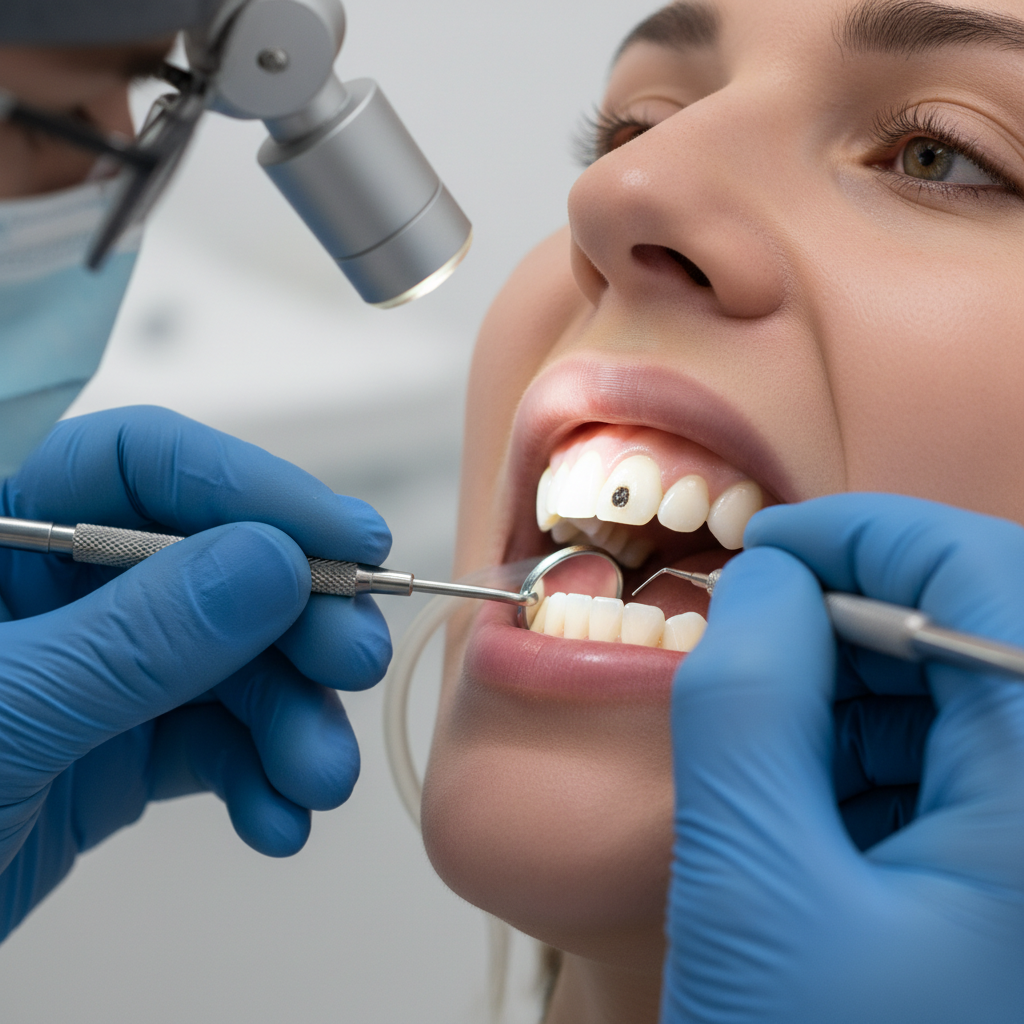
Dentistry and ENT
- The Challenge: Working in small, dark, tubular cavities (mouth, ear canal).
- The Requirement: Shadow control and defined spot size.
- Key Feature: Coaxial illumination is vital here. ENT surgical headlamp features often prioritize a very tight, focused spot (10mm-40mm) to illuminate the tympanic membrane or throat without blinding the patient with spill light.
- Ideal Choice: A lightweight, wireless unit with a smaller spot aperture and variable intensity to reduce glare from saliva or instruments.
Veterinary Surgery
- The Challenge: Versatility and Ruggedness.
- The Requirement: One light must serve for a Great Dane orthopedic surgery and a feline dental extraction.
- Key Feature: Veterinary surgical headlamp needs vary wildly. A headlamp with a wide range of adjustable focus (zoom) and intensity control is best here. It must also be incredibly durable to withstand fur, dust, and unpredictable animal movements. Cordless is often preferred to prevent animals from tangling in wires during prep or minor exams.
Deep Cavity Surgery (General/Cardio/Spine)
- The Challenge: Distance and Depth. The surgeon is often standing straight up, looking into a deep incision.
- The Requirement: Penetrating power and battery longevity.
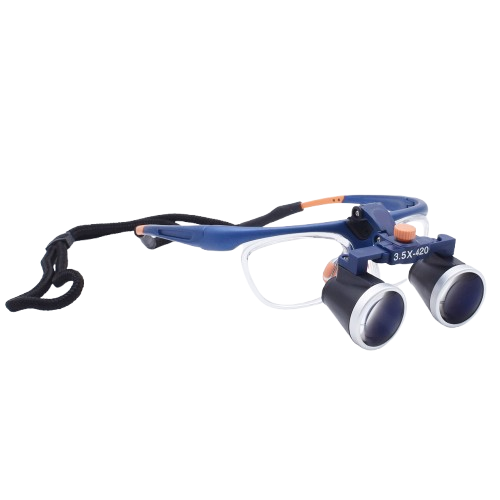
- Key Feature: These buyers need the highest end of the Lux spectrum (100k+) and potentially magnified medical headlamp options where the light pairs seamlessly with 3.5x or higher magnification loupes. A belt-pack battery is often preferred here to reduce head weight during 6+ hour procedures where every ounce matters for neck comfort.
Plastic and Cosmetic Surgery
- The Challenge: Aesthetics and Tissue Viability.
- The Requirement: Perfect color rendering.
- Key Feature: CRI > 95 is non-negotiable. You cannot assess skin flap viability, capillary refill, or match skin tones under poor lighting. The “R9” value must be high to ensure blood supply is visible and healthy.
VII. The Investment: Price vs. Value
When looking at a medical headlamp pricing guide, you will see a massive disparity. You can find a “medical light” on consumer sites for
300,andprofessionalsystemsfor
3,000. Why the difference?
The Hidden Cost of “Cheap”
Medical headlamp reviews B2B often highlight that budget units suffer from issues that don’t show up on the spec sheet but become painfully obvious after three months of clinical use:
- Color Shift: As the battery voltage drops, cheap drivers fail to regulate power, causing the light to turn blue or yellow, altering your perception of tissue.
- Battery Fade: The “5-hour” battery lasts 40 minutes after six months of use due to poor cell quality.
- Mount Failure: Plastic hinges and clips snap, rendering the light useless.
- Artifacting: The beam develops dark spots or rings, causing eye strain as your brain unconsciously tries to compensate for the visual noise.
Making the Right Choice: TCO
For procurement managers medical lighting, the goal is Total Cost of Ownership (TCO). A durable unit with replaceable batteries, a solid warranty, and modular parts costs significantly less over 5 years than replacing cheap units every 8 months.
When evaluating a vendor, ask these qualifying questions:
- Is the battery proprietary or can standard cells be used?
- Can the cable be replaced independently of the light source? (Cables are the most common failure point).
- What is the turnaround time for repairs?
- Does the company offer loaner units during service?
If you are unsure which model fits your clinical environment, reviewing a direct comparison can clarify the specs. Check out our detailed breakdown on the KD-203AY-7 comparison page to see how different specifications translate to clinical performance.
VIII. Conclusion
Choosing a medical headlamp is not just about illumination; it is about investing in your own capability and longevity. A light that offers high CRI, ergonomic balance, and reliable battery power effectively disappears during use. It allows you to enter a flow state, focusing entirely on the patient rather than fighting your equipment or squinting to see details.
Don’t let poor lighting be the limiting factor in your surgical performance. Whether you prioritize the mobility of a portable surgical light or the raw intensity of a deep-cavity illuminator, ensure the specs match your clinical reality. The right light doesn’t just brighten the room; it sharpens your skills.
Key Takeaways for the Buyer:
- CRI > 90 is mandatory for tissue safety and correct diagnosis. Don’t compromise here.
- Ergonomics (weight < 400g and proper balance) prevents career-shortening cervical injury.
- Hot-swappable batteries are the gold standard for cordless workflow, ensuring you are never left in the dark mid-incision.
- IP-rated durability ensures the investment withstands the harsh chemical environment of the OR, reducing replacement costs.
Ready to see the difference? Explore our full range of professional medical lighting solutions today and find the precision tool that fits your practice.