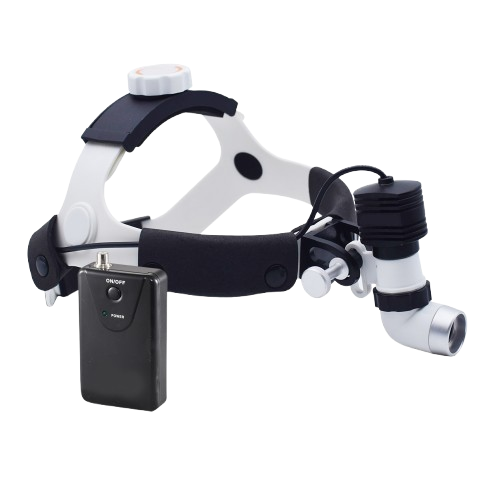
Why cordless LED medical headlights providing shadow-free illumination are becoming the gold standard for modern surgeons.
The “TL;DR” — Key Takeaways
Professional surgical headlamps eliminate dangerous shadows through coaxial illumination, ensuring you can visualize the bottom of deep cavities clearly. Modern cordless LED medical headlights offer superior mobility, high Color Rendering Index (CRI) for accurate tissue assessment, and extended battery life, significantly boosting operating theater efficiency.
Shadow-FreeCordless MobilityHigh CRI
Ever feel like you’re fighting a losing battle with shadows in the OR? You position the overhead boom lights perfectly, scrub in, and then five minutes later, you block the beam with your own head as you lean in for a critical view. It’s a frustrating dance we all know too well.
That’s exactly why professional surgical headlamps have evolved from “nice-to-have” accessories into absolute necessities for precision surgery. We aren’t just talking about a flashlight on a strap; we’re talking about sophisticated optical instruments that define your field of view and enhance medical illumination solutions across the board.
In this guide, we’re diving deep into why this technology is the current gold standard. I’ll walk you through how surgical headlights can save your neck (literally) and why cordless is the future. Ready to stop wrestling with boom arms? Read on.
The Evolution of Medical Illumination Solutions
If you trained a decade or two ago, your memory of headlamps might be heavy, hot units tethered to a wall by a fiber optic cable that felt like a leash. While those older systems were brighter than overheads, they came with significant trade-offs: heat generation that could dry out tissue and a restrictive range of motion.
Today, the industry has shifted almost exclusively toward advanced LED technology. Unlike the yellow-tinted halogen bulbs of the past or the fragile xenon ceramic bulbs, modern LED surgical lights provide cool, consistent, and energy-efficient light. They have transformed the landscape of medical headlight technology, moving us into an era of portability and sustainability.
| Feature | Halogen / Fiber Optic | Modern LED Headlamps |
|---|---|---|
| Heat Generation | High (Risk of burns) | Very Low (Cool Operation) |
| Color Temp | Yellow (~3200K) | Daylight (~5800K) |
| Mobility | Tethered (Cable) | Cordless / Battery |
| Lifespan | ~500 Hours | 50,000+ Hours |
Top 17 Benefits of Professional Surgical Headlamps
Why are hospitals upgrading their operating theater efficiency plans? It comes down to performance, safety, and economics. Here are the top benefits of making the switch.
1. Coaxial Illumination: Banishing the Shadows
The single biggest advantage of a headlamp is physics: coaxial illumination. This means the light source originates from the same axis as your vision—right between your eyes. Wherever you look, the light follows.
This guarantees shadow-free illumination. Even if you are peering into a deep pelvic cavity or a narrow thoracic incision, the bottom of the wound is just as bright as the surface, eliminating the “black hole” effect immediately. Unlike overhead lights, your head and hands can never block a light source that is mounted on your forehead.
2. Precision & Accuracy
Surgery is a game of millimeters. Visual ambiguity is dangerous. High-quality headlamps tighten the beam spot size, allowing for intense focus on specific structures.
For those requiring high-intensity focus for long durations, models like the KD-205AY-2 are designed to deliver that piercing brightness needed for deep tissue work without losing edge clarity. You aren’t just making the room brighter; you are making the anatomy clearer.
3. The Cordless Revolution
Cordless LED medical headlights have eliminated the “cord tangling dance” entirely. By integrating lightweight lithium-ion batteries directly into the headset or a belt pack, you gain complete freedom of movement. This allows for superior ergonomics, as you aren’t fighting the drag of a cable.
4. True-to-Life Color Accuracy (High CRI)
Not all white light is created equal. High CRI surgical lighting (Color Rendering Index > 90) is vital for differentiating between an artery and a vein, or assessing tissue perfusion. Cheap LEDs often have a blue tint that makes tissue look necrotic or washed out. If you can’t trust the color you’re seeing, you’re guessing.

5. Ergonomic Design: Saving Your Neck
“Surgeon’s stoop” is a real occupational hazard. With ergonomic surgical lighting, the light moves with you, allowing you to maintain a neutral cervical spine position. Modern headsets, such as the KD-205AY-1, feature “cranial support”—top straps and occipital baskets that distribute weight evenly, preventing pressure headaches and long-term neck injuries.
6. “Cool” Operation
Traditional halogen lights were essentially heaters. Advanced LED technology converts most energy into light rather than heat, ensuring cool operation. This prevents tissue desiccation in delicate procedures and keeps the surgeon comfortable under the sterile gown.
7. Hands-Free Operation
In the OR, sterility is king. A headlamp offers true hands-free illumination. Once it is on and aimed, you don’t touch it. Your focus stays on the patient, not on reaching up to adjust overhead boom handles every time you shift your stance.
8. Adjustable Spot Size (The Iris Effect)
A general surgeon needs a flood; a spine surgeon needs a spot. Professional headlamps feature an adjustable iris (typically 20mm to 110mm), meaning one device adapts to every stage of the surgery, from the initial wide incision to the deep, narrow work.
9. Battery Life and Reliability
The fear of a light dying mid-procedure is solved with high-density lithium-polymer cells that run for 4-10 hours. Many premium systems utilize “hot-swappable” technology, granting infinite runtime for marathon cases by allowing a nurse to swap the battery pack without the light ever flickering.

10. Operating Room Efficiency
Time under anesthesia correlates with patient risk. Headlamps streamline surgical flow by removing the need to constantly adjust overhead lights. Setup times are also reduced—no fiber optic cables to inspect or light sources to wheel around.
11. Cost-Effectiveness and ROI
While an investment, a professional headlamp is cost-effective. LEDs last 50,000+ hours, compared to 500 hours for Xenon bulbs. Durability means fewer repairs, a massive selling point for procurement managers looking to reduce total cost of ownership.
12. Integration with Loupes and Cameras
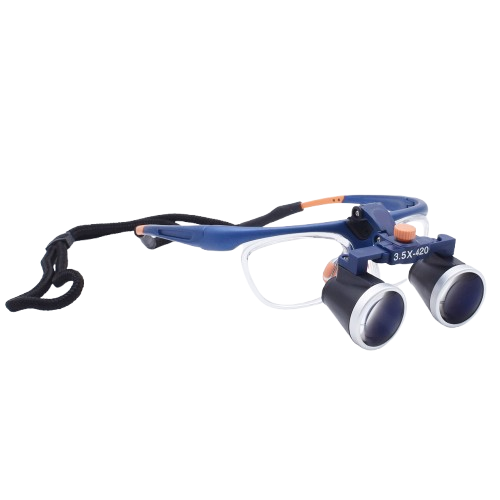
For microsurgery, magnification is key. Specialized models like the KD-203AY-7 mount seamlessly onto surgical loupes, ensuring the light path is parallel to the magnified visual path. This integration is seamless and maintains the balance of your loupes.
13. Reduced Eye Strain
High-quality headlamps provide uniform, edge-to-edge brightness. This consistency reduces processing work for your visual cortex, keeping eyes fresh even at the end of a double shift. Cheap lights often have a “hot spot” in the center and dim edges, forcing your eyes to constantly adjust.
14. Portability Across Clinics
Surgeons frequently consult in the ER or ICU where lighting is subpar. Portable headlamps for surgery allow you to bring OR-quality illumination wherever you go. You bring your own sun, ensuring consistency in your visual assessments regardless of the room’s infrastructure.
15. Improved Infection Control
Cables are dirt magnets that drag across the floor. Cordless headlamps eliminate this vector for cross-contamination. Sealed units can be wiped down with standard hospital disinfectants easily, maintaining strict hygiene protocols.
16. Redundancy and Safety
If hospital power fails, generators take time to kick in. A battery-powered surgical headlamp is the ultimate safety redundancy, ensuring your view remains uninterrupted during power fluctuations.
17. Scalability for Specialties
These devices serve everyone: ENT navigating sinus passages, Spine illuminating retraction channels, and Dentistry seeing into the posterior oral cavity. Standardizing on one high-quality model simplifies inventory management for the hospital.
Common Challenges & Solutions
The Weight Factor
Historically, battery packs were heavy. However, modern lithium-polymer batteries are incredibly light. If you are sensitive to weight on your nose, look for models with a “belt pack” battery option, which takes the weight off your head entirely.Brightness Intensity (Glare)
Is it possible to have too much light? Yes. Glare on wet tissue can be blinding. This is why adjustable brightness levels are a standard feature on professional models, allowing you to dial it down when working on reflective surfaces.Initial Cost vs. Value
The sticker price is higher than generic lights, but the Total Cost of Ownership (TCO) is lower. Zero bulb replacements and no fiber-optic cable repairs mean the LED system pays for itself quickly.
Real-World Applications
Neurosurgery & Spine
Overhead lights fail at steep angles. Headlamps shoot light straight down the “tunnel,” illuminating the dura and nerve roots clearly.
ENT (Otorhinolaryngology)
The nasal cavity is a shadow trap. ENT surgeons cannot work effectively without high-intensity, coaxial light sources.
Dental & Oral Surgery
Portable headlamps allow dentists to see the posterior oral cavity with high precision, avoiding constant chair light adjustments.
Plastic & Reconstructive
Assessing skin flaps requires perfect color rendering. High CRI LEDs are critical to ensure tissue viability is judged correctly.

Frequently Asked Questions
How long do surgical headlamp batteries typically last?
Most professional cordless systems provide between 4 to 10 hours of continuous use at full intensity. Models with hot-swappable batteries allow you to swap power packs mid-surgery without losing illumination, effectively offering infinite runtime.
What makes a headlamp shadow-free?
Surgical headlamps utilize coaxial illumination, meaning the light source is aligned directly with the surgeon’s line of sight between the eyes. This physics-based alignment ensures that wherever you look, the light follows, eliminating shadows cast by hands or instruments.
Is an LED headlamp better than fiber optic?
In most modern contexts, yes. LEDs are more durable, cooler, and untethered. While fiber optic systems can be incredibly bright, they require being tied to a light source console. LEDs offer comparable brightness with far greater mobility.
What brightness (Lux) do I need for general surgery?
For general surgery, 50,000 to 70,000 Lux is often sufficient. However, for deep cavity work (neuro, spine, cardiac), we recommend 100,000 to 200,000 Lux to ensure visibility at depth.
Conclusion
We often obsess over the steel in our hands—the scalpels, the retractors—but we sometimes forget that we can only treat what we can see. Medical illumination solutions are critical surgical instruments that dictate the quality of your outcomes.
Investing in a professional, cordless LED headlamp is an investment in your own visual health and patient safety. Don’t settle for “good enough” lighting. Equip yourself with the reliability and precision of professional surgical headlamps.
Thanks for reading! If you found this helpful, check out our deep dive into specific models in our surgical headlight catalog.