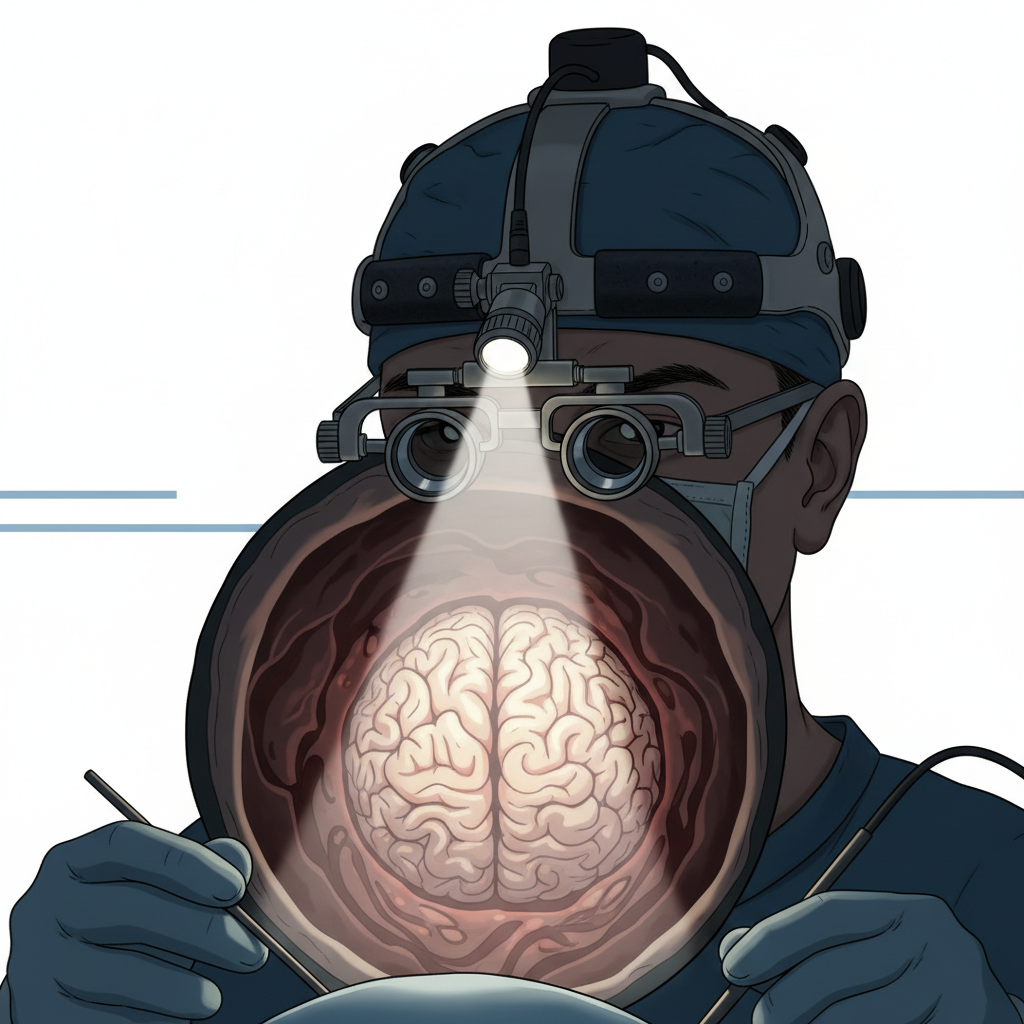
For the Busy Professional: The 30-Second Summary
Short on time? Here is the bottom line. When procuring medical headlamps, stop looking at just the price tag. Prioritize LED technology (cool, 50,000+ hour life) with a CRI >90 for tissue accuracy. Essential features include cordless portability with hot-swappable batteries to ensure zero downtime, and—most critically—ergonomic balance to prevent surgeon neck strain.
1. Introduction: The Critical Role of Precision Lighting
In the high-stakes environment of the operating room, shadows are the enemy. Absolute visibility isn’t a luxury; it’s the baseline for surgical precision and patient safety. We have finally moved past the era of hot, tethered fiber optic systems, entering a new age of high-performance medical examination headlamps that promise cooler, consistent light. But with so many options on the market, how do you distinguish true clinical value from marketing fluff?
I wrote this guide to help you look beyond the sticker price and understand nuances like lumen potency, usable brightness levels, and long-term photobiological safety. Consider this your comprehensive surgical headlamp buying guide, designed to help you navigate technical specifications and regulatory compliance. I’ll show you why ergonomic design is non-negotiable for surgeon health and detail hospital procurement best practices to ensure you select lights that deliver superior illumination intensity where it counts most—at the operating table.
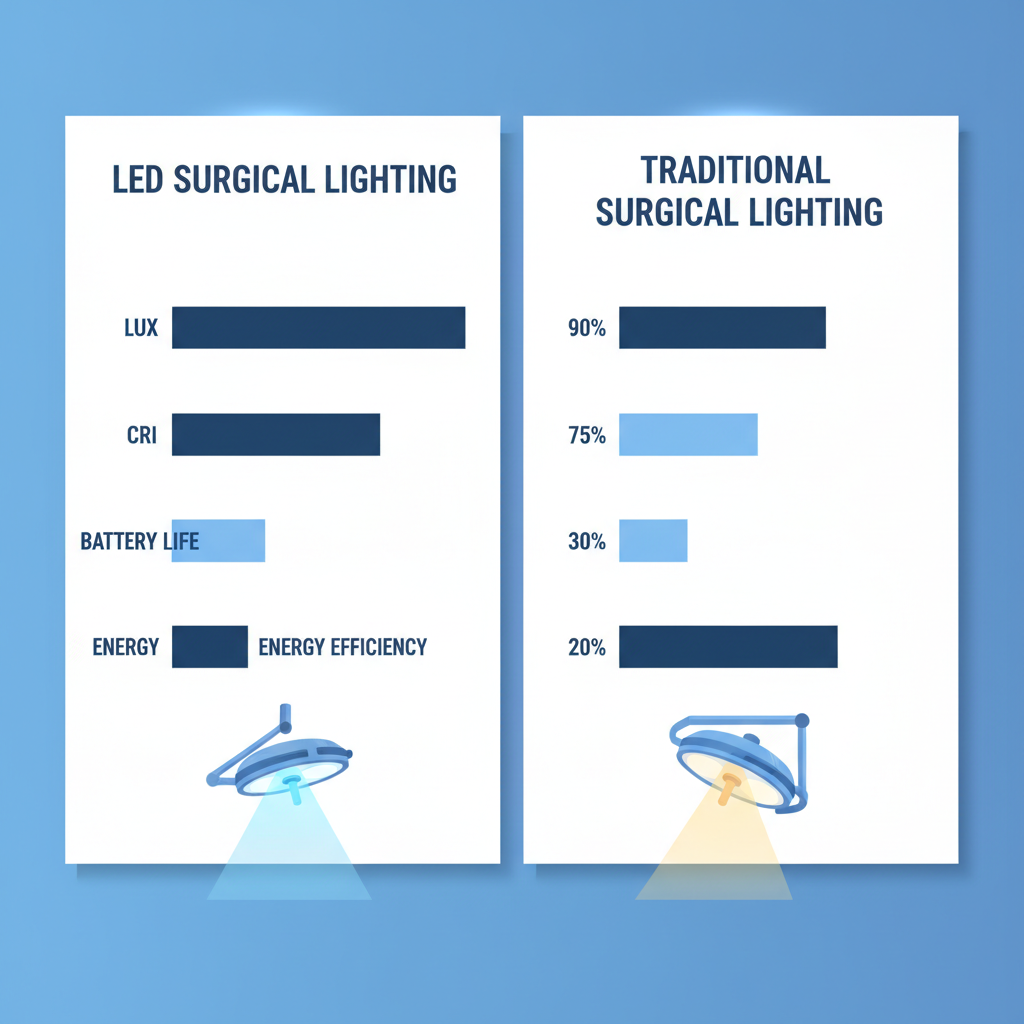
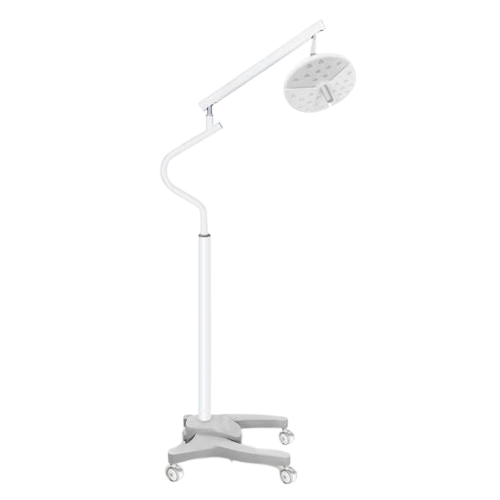
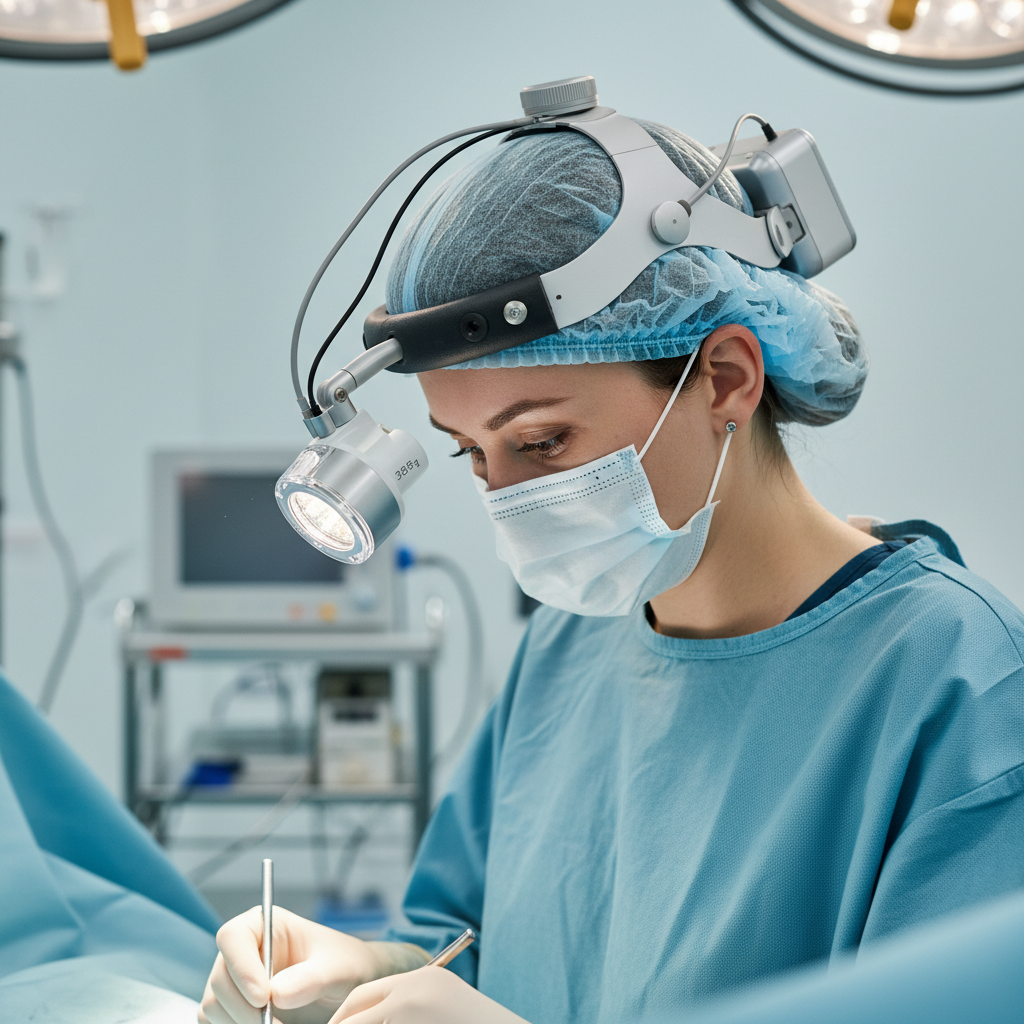
Caption: The difference between standard and high-performance illumination can be the difference in clinical outcomes. Source: Ary Medical.
2. The Core Technology: Why LED Dominates the Operating Room
If you are still buying Xenon or Halogen systems, you are burning money—literally and figuratively. I’ve seen hospitals waste thousands on maintenance for these dinosaurs. The shift to LED technology in medical lighting isn’t just a trend; it’s a complete paradigm shift that has rendered older technologies obsolete.
The LED Revolution
The primary reason you should be retrofitting your equipment lists with high-intensity LED illumination is efficiency. Old-school Halogen bulbs generate light by getting hot—extremely hot. This heat radiates onto the surgeon’s forehead and, worse, onto the patient’s sensitive tissue, posing a risk of desiccation (drying out) during long procedures.
LEDs (Light Emitting Diodes) are solid-state devices. They produce “cool” light. This doesn’t mean the light is blue; it means the thermal output is negligible. This keeps the operating field safe and your surgeons comfortable.
Longevity and Reliability
From a procurement standpoint, this is your biggest ROI factor.
- Halogen/Xenon: Typically last 500 to 2,000 hours. They degrade over time, losing brightness before burning out unexpectedly.
- LED Modules: Rated for 50,000+ hours.
To put that in perspective, if a surgeon uses the headlamp for 4 hours a day, 5 days a week, an LED module will last roughly 48 years. You eliminate the “bulb budget” entirely. There is no downtime waiting for maintenance to swap a blown bulb mid-procedure.
Photobiological Safety
We must also talk about safety beyond heat. Photobiological safety refers to the risk of blue light damage to the retina. I always tell clients to check for compliance with IEC 62471 standards. High-quality medical LEDs, like those found in Ary Medical’s advanced surgical line , are engineered to minimize the “blue spike” in the light spectrum, ensuring they are safe for long-term retinal exposure for the surgical team.
3. Visual Performance: Evaluating Brightness and Beam Quality
It is easy to get lost in the numbers game. Manufacturers love to throw around “Lumens” and “Lux,” but let me be clear: they are not the same thing.
Understanding Light Metrics
- Lumens: The total amount of light emitted from the source in all directions. Think of this as the raw “horsepower” of the bulb.
- Lux: The intensity of light that actually hits the surface (the patient) at a specific distance.
For a surgeon, Lux is the only metric that matters. I’ve tested lights with massive lumen counts that had poor optics, scattering light everywhere except the surgical cavity.
Illumination Intensity Requirements
Not every procedure needs the power of the sun. You need brightness levels matched to the task:
- General Examination: 30,000 – 50,000 Lux. This is sufficient for dermatology, ENT basics, and general check-ups.
- Deep Cavity Surgery: 100,000 – 160,000+ Lux. For neurosurgery, cardiovascular, or deep abdominal work, you need light that can penetrate deep into the body cavity without getting washed out by overhead lights. The IEC specifically recommends surgical lighting fall within the 40,000 to 160,000 Lux range for optimal safety and visibility.
Optical Versatility and the “Halo Effect”
Have you ever used a flashlight that has a bright center spot but a weird, dark ring around it? That is poor optical engineering.
In surgery, you need adjustable beam medical headwear that provides a perfectly uniform spot—edge-to-edge consistency. If the center is hot (too bright) and the edges are dim, the surgeon’s eyes have to constantly dilate and constrict as they look around the wound. This causes massive eye strain and headaches.
- Adjustable Focus: This is non-negotiable. A surgeon needs to be able to switch from a broad flood (100mm+) for surface work to a tight, intense spot (20mm) for deep vessel work instantly.
Color Rendering Index (CRI)
Imagine trying to distinguish between a healthy nerve and a slightly inflamed nerve. If your light source washes out colors (low CRI), they both look gray.
- CRI < 80: Colors look dull/artificial.
- CRI > 90: Essential for medical use. It renders reds and pinks accurately, allowing for differentiation between veins, arteries, and nerves.
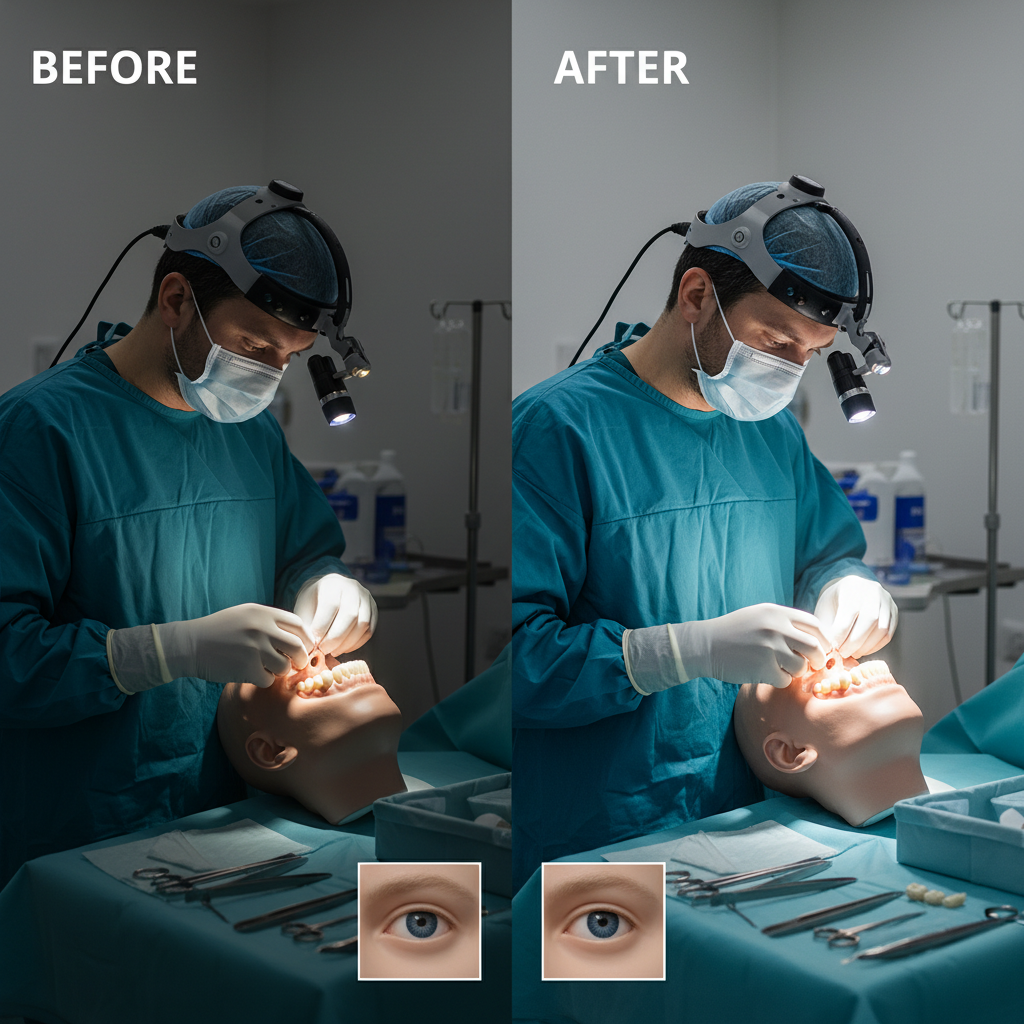
Caption: High CRI is vital for distinguishing tissue health. Source: Ary Medical.
4. Power Systems: The Shift to Cordless Freedom
The days of being tethered to a wall console by a fragile fiber optic cable are ending. The market is moving aggressively toward cordless surgical lights, and for good reason.
Cordless vs. Tethered
- Tethered: Unlimited runtime, but limits movement. The surgeon is “leashed” to the console. Cables are tripping hazards and are notorious for breaking (fiber optics crack when stepped on).
- Cordless: Complete freedom of movement. The surgeon can walk to the viewing screens, consult with colleagues, and move around the patient without unhooking.
Battery Chemistry and “Hot-Swapping”
If you go cordless, your biggest anxiety is likely: “What if the light dies mid-surgery?” This is where battery-powered headlamps for procedures have evolved.
- Lithium-Ion Technology: Provides consistent power output. The light doesn’t dim as the battery drains; it stays full brightness until it cuts off.
- Hot-Swappable Technology: This is a procurement must-have. It means the unit usually runs on one battery but has a slot for a second, or the batteries can be swapped so quickly (or the unit has a small internal reserve) that the light never goes out.
Weight vs. Capacity
There is a trade-off here. A battery that lasts 10 hours is heavy. A battery that lasts 2 hours is light. From my experience, the “sweet spot” for most hospital procurement is a lightweight battery that lasts 3-4 hours, combined with a charging station that always has a fresh backup ready.
5. Ergonomic Design: Protecting the Surgeon
We often think about patient safety, but what about the surgeon? Cervical spine injury is a real occupational hazard for surgeons who wear heavy loupes and headlights for 8 hours a day.
The Ergonomics of Wearables
Ergonomic design for surgeons isn’t just about comfort; it’s about career longevity. A heavy, front-loaded headlight acts like a lever on the neck muscles. Over time, this causes chronic pain and can even force early retirement.
Weight Distribution
When evaluating samples, look for “Balanced” units.
- Bad Design: Light module and batteries are ALL on the forehead. This pulls the head forward, forcing the surgeon to engage neck muscles constantly to look up.
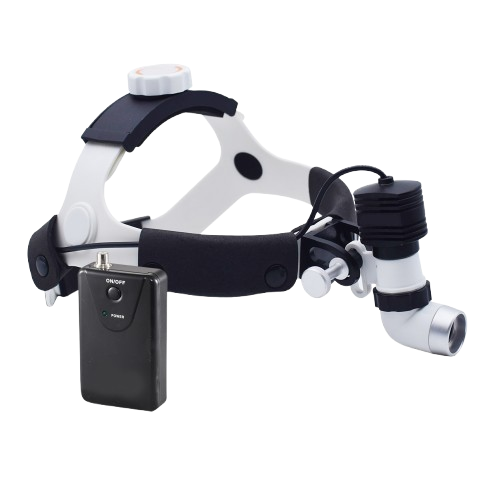
- Good Design: The light is on the front, and the battery pack is on the back of the head strap (occipital). This counter-balances the weight, keeping the head neutral with zero effort.
Heat Management
Even efficient LEDs produce some heat. High-end medical examination lights use aluminum heat sinks (fins) to dissipate this heat away from the surgeon’s forehead. Cheap plastic models trap the heat, making the surgeon sweat, which fogs up their loupes—a surgeon’s nightmare.
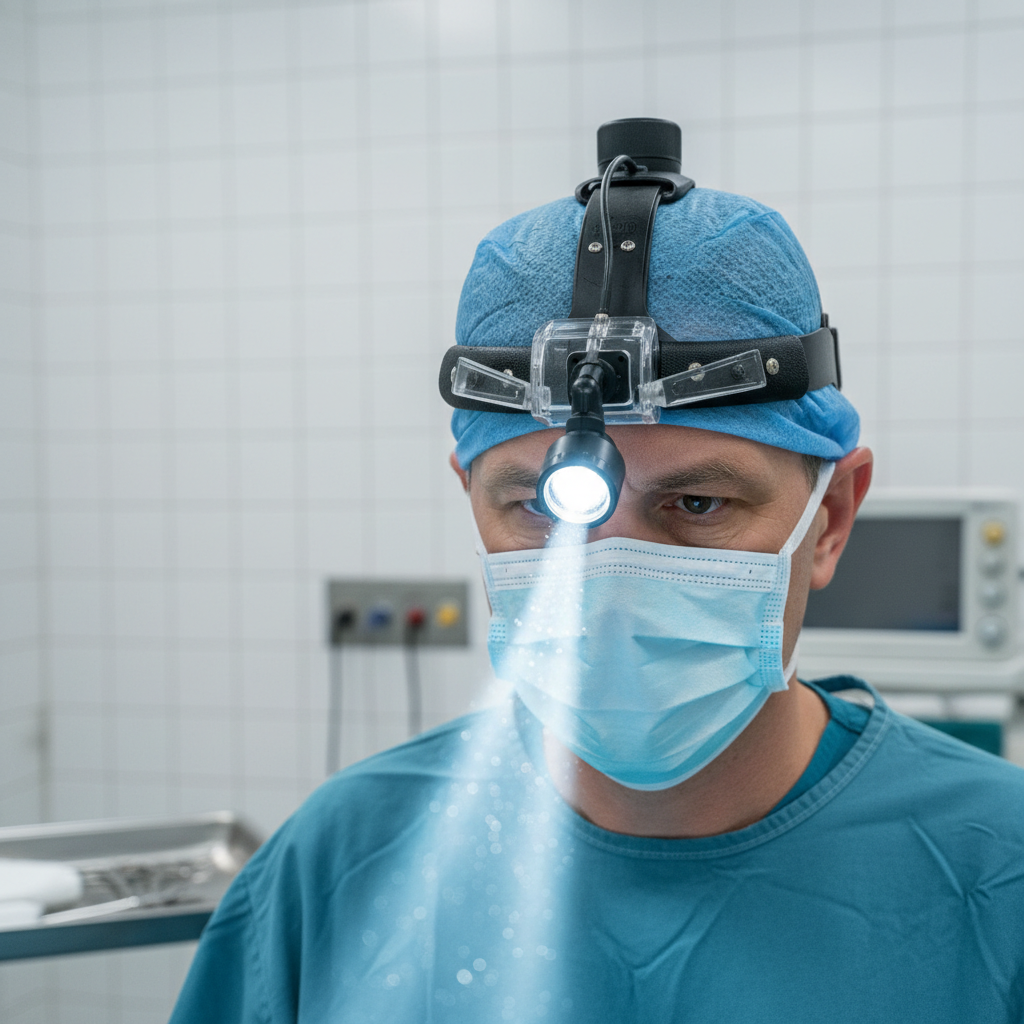
Caption: Proper weight distribution prevents chronic neck injury. Source: Ary Medical.
6. Infection Control and Sterility Features
In a post-COVID world, infection control is paramount. Everything that enters the OR must be easy to clean.
Design for Decontamination
Look for smooth, sealed surfaces. Knobs with deep grooves or “knurling” trap blood and bacteria and are a nightmare to clean. FDA-approved medical lighting often features membrane switches or smooth-wipe surfaces resistant to harsh hospital-grade disinfectants like CaviWipes.
Touch-Free Operation
Some of the newest tech I’ve seen involves motion-activated control. A surgeon can wave a hand in front of the lamp to dim it or turn it off. This maintains sterility because they never physically touch the unit once scrubbed in.
Sterilizable Components
If the light has a physical positioning handle, ask the vendor: “Is this handle autoclavable?” Many units come with detachable joysticks that can be sterilized, allowing the surgeon to adjust the beam angle mid-surgery without breaking the sterile field.
7. Comparative Analysis: Matching the Light to the Specialty
One size does not fit all. Procurement should ideally standardize the battery platform but customize the optics for the department. You can explore different models tailored for these specialties here .
| Specialty | Key Requirement | Recommended Feature Set |
|---|---|---|
| Neurosurgery / Spine | Deep Cavity Visibility | High Lux (100k+), Narrow Spot capability, Coaxial alignment with loupes. |
| Dentistry | Composite Curing Safety | Shadow-free beam, Mandatory Yellow/Orange filter (to prevent premature curing). |
| ENT / Plastic Surgery | Tissue Color Accuracy | CRI 95+, Lightweight for mobility, moderate brightness. |
| ER / General Exam | Speed & Durability | Rugged design, simple on/off, lower cost options. |
8. Strategic Procurement: Analyzing Cost and Compliance
Cost-Benefit Analysis: The TCO Approach
Do not buy based on the lowest bid. You must calculate the Total Cost of Ownership (TCO).
- Initial Cost: The price of the unit.
- Consumables: For LED, this is 0.ForXenon,it′s500-800perbulbevery6months,plusfiberopticcables(300+) that break annually.
- Batteries: How many cycles are the batteries rated for? 500? 1000?
- Warranty: Does the warranty cover the cable? (Usually not). Does it cover the battery?
When you factor in zero bulb replacements and durable cables, a slightly more expensive LED unit is often 30-40% cheaper over 5 years than a “cheap” Xenon system.
Regulatory Compliance
Ensure the equipment is FDA-approved medical lighting (or CE marked for Europe). It must meet IEC 60601 electrical safety standards. Using non-certified “consumer grade” headlamps (like hiking headlamps) in a hospital setting opens the facility to massive liability.
Vendor Support
Ask about the “Try Before You Buy” program. No surgeon should be forced to use a headlight they haven’t worn for at least one procedure. A vendor who refuses a trial is a massive red flag.
9. Procurement Checklist for Hospital Equipment
Use this procurement checklist for hospital equipment to standardize your buying process. Copy and paste this into your RFP documents.
- Light Source: Is it high-intensity LED illumination (not Halogen/Xenon)?
- Color Quality: Is the CRI >90 for accurate tissue differentiation?
- Brightness: Does it meet the Lux requirement for the specific department (e.g., >100k for Surgery)?
- Power: Is it a cordless surgical light? If so, are batteries hot-swappable?
- Ergonomics: Is the weight balanced (battery on back) to prevent neck strain?
- Optics: Does it have adjustable focus with a clean, uniform spot (no halos)?
- Hygiene: Are surfaces smooth and resistant to hospital disinfectants? Are handles autoclavable?
- Safety: Is there proof of photobiological safety (blue light hazard compliance)?
- Support: Are replacement batteries and parts readily available domestically?
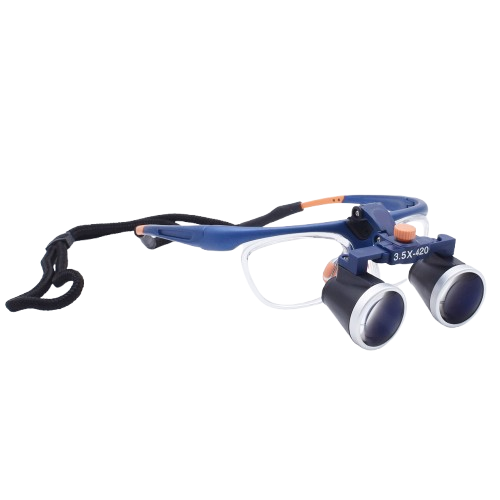
Caption: A complete kit should include backup power solutions. Source: Ary Medical.
10. Implementation: Hospital Procurement Best Practices
Standardization vs. Customization
The goal is to standardize the platform (batteries, chargers) to reduce inventory headaches, while customizing the headgear (light module intensity) for different departments. This simplifies supply chain management significantly.
Stakeholder Trials
Conduct “Blind” Wear Tests. Cover the brand names with tape. Have surgeons wear Unit A and Unit B for 30 minutes each. Gather data on:
- Neck comfort.
- Visual clarity.
- Ease of controls. This data is your shield against “Brand Bias” where surgeons simply ask for what they used in residency, even if it’s outdated.
Volume Purchasing
Leverage your network. If you are buying adjustable beam medical headwear for the OR, ask the ER and Dental departments if they need upgrades too. Bulking these orders can usually secure a 10-20% discount or free extended warranties.
11. Conclusion: Lighting the Way Forward
In the final analysis, the choice of a medical headlamp is not merely a line item on a budget sheet; it is a direct investment in surgical outcomes and the long-term well-being of your medical staff. By pivoting to high-performance medical examination headlamps, hospitals can eliminate the recurring costs of outdated fiber-optic systems while providing surgeons with the LED technology required for modern, high-precision procedures.
Final Recommendation:Do not let the lowest initial price dictate your choice. A cheap, heavy, unbalanced headlamp costs more in the long run through surgeon neck injuries and reduced procedural efficiency. Instead, prioritize ergonomic design to protect your talent and optical quality to protect your patients. Use the checklist provided, demand rigorous trials, and select a lighting solution that truly illuminates the path to better healthcare.
Ready to upgrade your surgical lighting? Explore the complete range of high-performance, ergonomic solutions at Ary Medical today and see the difference precision lighting makes.