Let’s be honest: relying solely on overhead OR lights is a chronic pain in the neck—literally.
You’re deep in a narrow corridor, battling shadows while trying to distinguish healthy tissue from nerves. It’s exhausting. You find yourself craning your neck, contorting your body, and breaking your sterile flow just to get a decent view.
But finding the right gear to solve this isn’t easy. You’re constantly bombarded with technical jargon like lumen output, diopter adjustment, and spot size uniformity.
Does a higher lux count actually help, or will it just blind you with glare? Should you cut the tether with a modern cordless model, or stick to the consistency of a corded system?
In this guide, I’m going to cut through the noise. We’ll compare the top contenders, break down the science of sight, and help you find a surgical headlight setup that doesn’t just light up the cavity, but actually saves your career from physical burnout.
Ready to see what you’ve been missing? Let’s dive in.
Quick Summary: What Matters Most?
If you are in a rush between cases, here is the bottom line. The “best” headlamp isn’t just the brightest one. It’s the one that balances intensity (Lux) with color accuracy (CRI) and ergonomic weight distribution.
- For Deep Cavity (Neuro/Cardio): Prioritize high intensity (100k+ Lux) and corded belt-packs for unlimited runtime.
- For High Mobility (ENT/Plastics/Dental): Go for lightweight, cordless LEDs with hot-swappable batteries.
- The Golden Rule: Always look for High CRI (90+) to ensure tissue color looks natural, not washed out.
1. The Unsung Hero of the OR: Why Your Headlamp Choice Matters
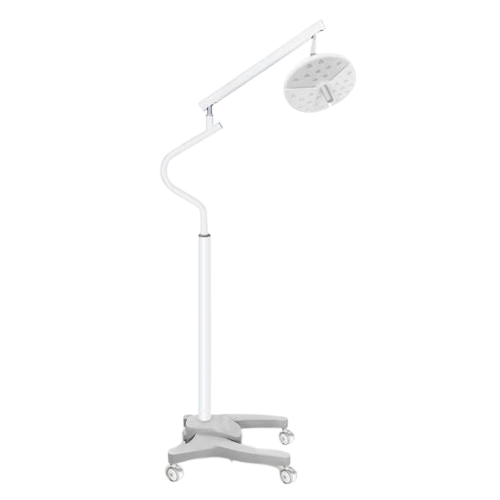
You might think the overhead lights—those massive, expensive saucers hanging from the ceiling—are doing the heavy lifting. And sure, they provide the ambient brightness. But when it comes to modern precision surgery, they are simply not enough.
Beyond the Overhead Lights
Here is the reality: Overhead lights create shadows. It’s simple physics. Every time you lean in to get a better view, your own head blocks the light path.
In deep-cavity procedures, relying on overheads means you are constantly adjusting the boom, breaking your flow, and compromising the sterile field. A dedicated headlamp puts the light exactly where your eyes are looking—this is called coaxial illumination. It means if you can see it, it’s lit. No shadows, no adjustments, just clear vision.
The Surgeon’s Pain Point: “Heavy Head” Syndrome
I can’t tell you how many surgeons I’ve spoken to who retire early because of cervical spine issues. It’s a silent career killer.
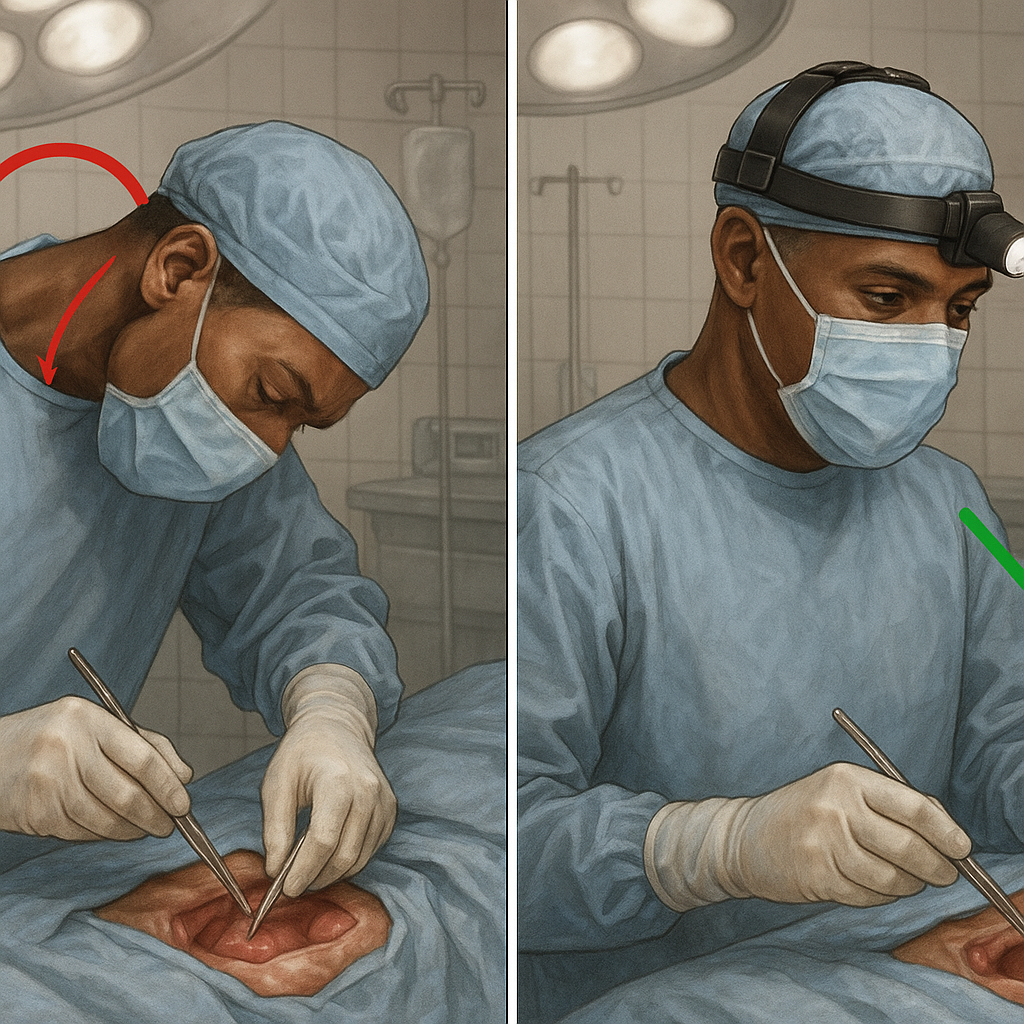
When the lighting is poor, your body compensates. You instinctively crane your neck forward to see better. Over a 6-hour case, that slight forward lean creates massive torque on your cervical vertebrae.
High-quality illumination allows you to maintain a neutral neck position. By bringing the light to your eyes, rather than your eyes to the wound, you are effectively saving your spine from chronic injury.
The LED Revolution
Remember the days of being tethered to a massive light box via a fragile fiber optic cable? Or the heat from halogen bulbs that felt like they were slowly cooking your forehead?
Those days are effectively over. We are witnessing a massive shift in the LED vs fiber optic surgical light debate. High-efficiency LEDs now offer the intensity of Xenon without the heat, the massive weight, or the fragility. It’s not just an upgrade; it’s a revolution in surgical ergonomics.
![Image: Side-by-side comparison of a surgeon’s posture with and without a headlamp, highlighting neck angle]
2. The Great Debate: Corded vs. Cordless Systems
This is the most common question I get from procurement managers and surgeons alike: “Should I go wireless?”
It’s the classic battle between freedom and power. Let’s break it down so you can decide what fits your specific workflow.
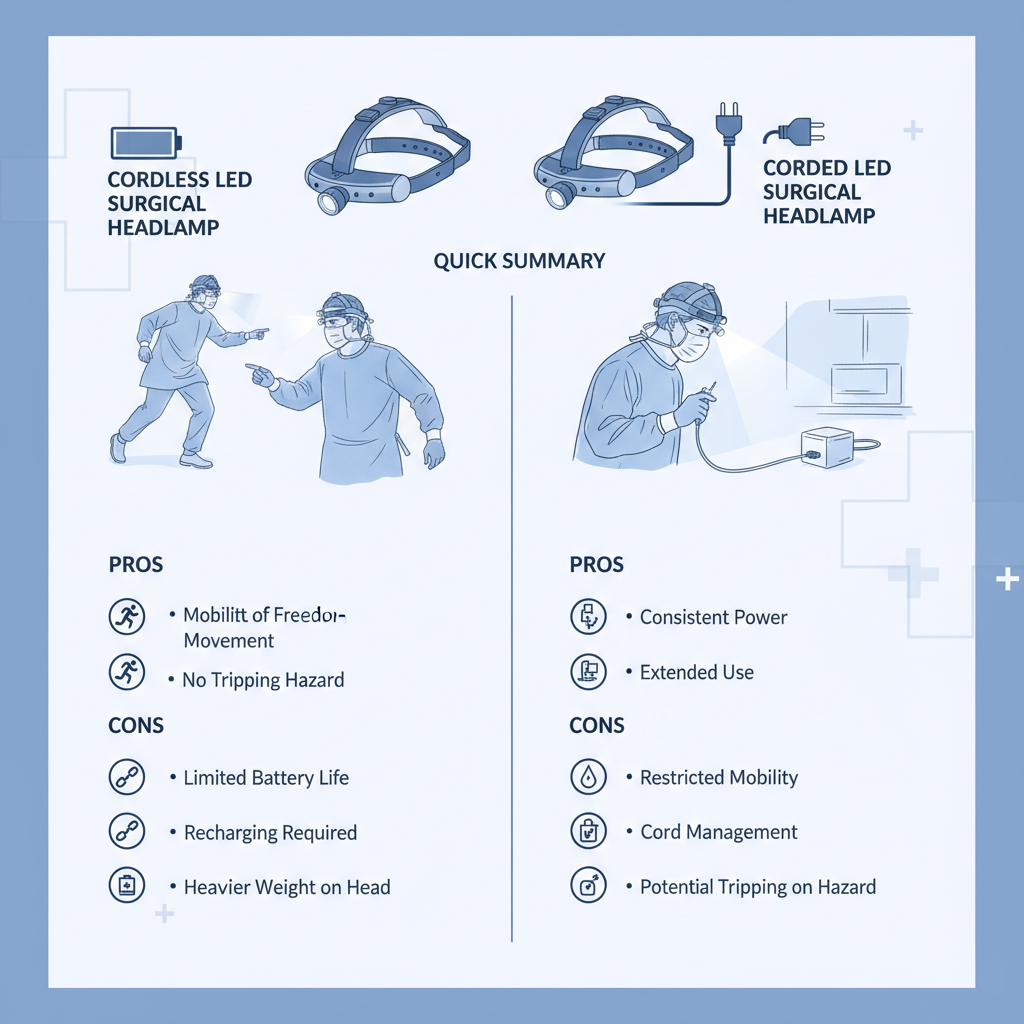
The Case for Cordless (Freedom & Mobility)
For many surgeons, cutting the cord is liberating.
- Eliminating the “Tether”: In a busy OR, cords are trip hazards. They get snagged on IV poles, they drag across the sterile field, and they limit how far you can move. Going cordless removes these risks entirely.
- Sterile Field Mobility: If you are in a high-movement specialty like Plastic Surgery or doing rounds in the ER, you need to move fast. You don’t have time to plug into a wall or clip a heavy battery pack to your belt.
- Hot-Swappable Tech: Early cordless models died after 2 hours. Today? We have hot-swappable battery systems. This means you can pop out a drained battery and click in a fresh one without the light ever going out. It effectively gives you infinite runtime.
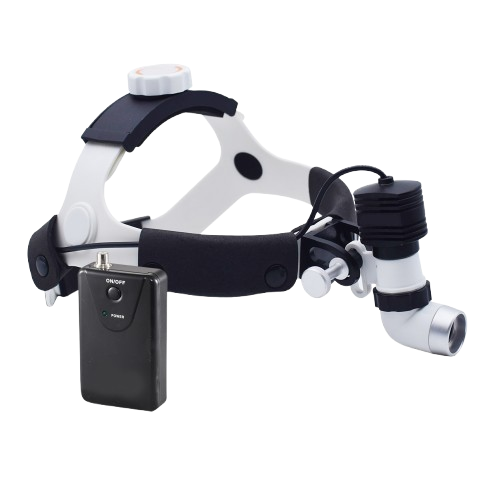
Pro Tip: If you are looking for a robust cordless option that balances weight and power, check out the KD-205AY-2 . It’s designed specifically to offer that “un-tethered” freedom without sacrificing the lux levels needed for serious work.
The Case for Corded (Power & Consistency)
However, don’t write off corded systems just yet. They still hold the crown for specific applications.
- Unlimited Runtime: If you are doing a 14-hour transplant surgery, you might not want to worry about swapping batteries at all. A corded unit plugged into a console runs forever.
- Weight Redistribution: Physics is physics. Batteries weigh something. By moving the power source from your head to a belt pack (or a console), you reduce the cranial load. This can be a dealbreaker for surgeons with pre-existing neck issues.
- Deep-Cavity Intensity: While cordless tech is catching up, the absolute brightest lights on the market—those used for deep neurosurgery—are often still tethered simply because they require more power than a small head-mounted battery can provide.
Comparison: Which fits your style?
| Feature | Cordless Headlamps | Corded (Belt-Pack/Console) |
|---|---|---|
| Mobility | High (Complete freedom) | Low (Tethered to pack or wall) |
| Weight on Head | Heavier (Battery included) | Lighter (Optics only) |
| Brightness | 30k – 80k Lux | 80k – 150k+ Lux |
| Best For | ENT, Plastics, Dental, rounds | Neuro, Cardio, 8hr+ surgeries |
| Setup Time | Instant | Requires cabling/plugging in |
Verdict: If you value mobility and shorter prep times (ENT, Plastics, Dental), go cordless. If you are doing marathon deep-cavity cases (Neuro, Cardiac) where maximum intensity and zero weight on the head are paramount, a corded belt-pack system might still be your king.
3. The Science of Sight: Optics, Color Accuracy, and Shadow Control
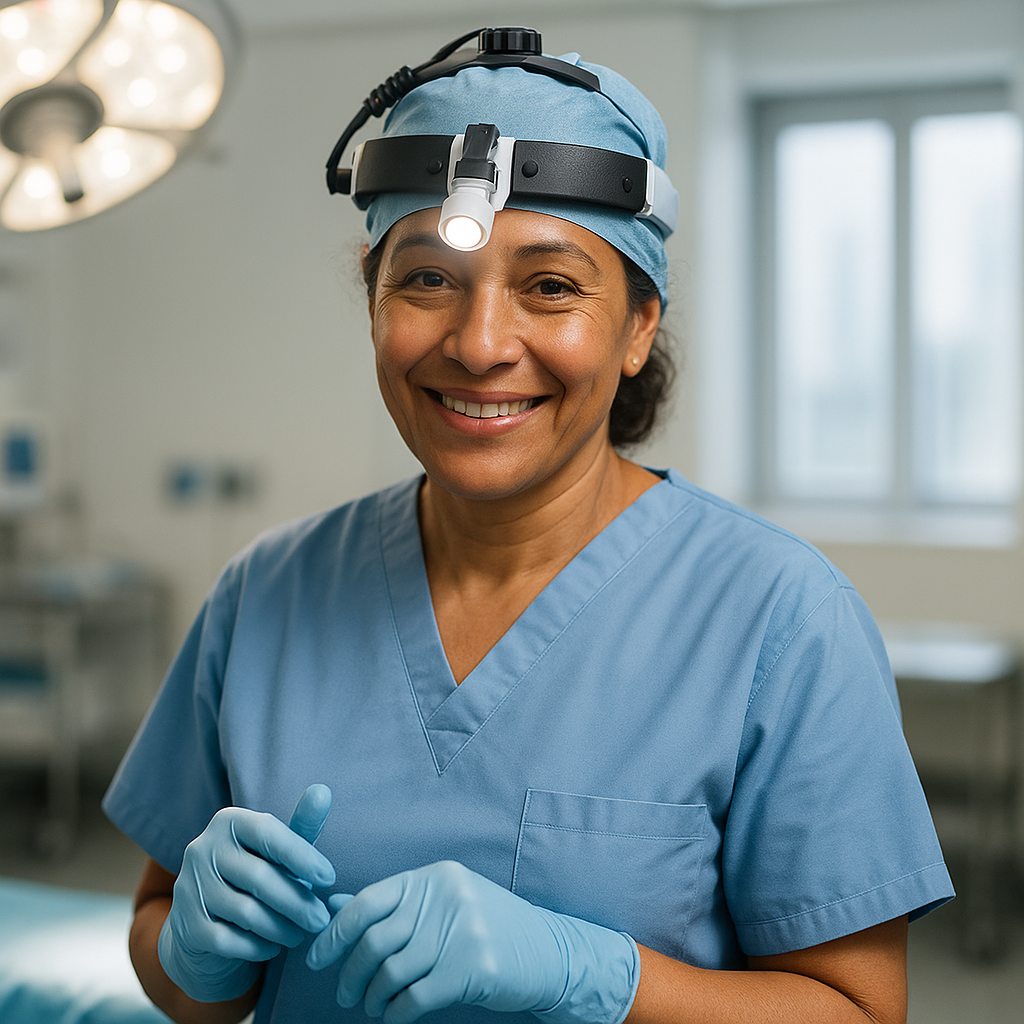
You’ll see a lot of numbers thrown around on spec sheets. Most of them are marketing fluff. Here are the three metrics that actually impact what you see during a procedure.
Lux vs. Lumens: Don’t Be Fooled
Don’t be fooled by “Lumens.” Lumens measure the total light coming out of the bulb in all directions. You don’t care about lighting up the nurse’s station; you care about the spot 40cm in front of your face.
- Lux measures light intensity at a specific distance.
- For general surgery, you need roughly 40,000 to 80,000 Lux.
- For deep cavity work, you are looking for surgical headlamp brightness lux levels of 100,000+.
However, be careful with “too bright.” Excessive glare from wet tissue can cause eye fatigue just as quickly as dim lighting can. Adjustable intensity is a must-have feature.
True Tissue Color (CRI)
Have you ever looked at tissue under a cheap LED and thought it looked washed out or “ghostly”? That’s low CRI (Color Rendering Index).
Standard white LEDs often lack the “red” spectrum. To distinguish a pale nerve from a slightly pinker artery, or to assess tissue viability based on blood flow, you need a high CRI tissue color rendering index.
- Standard LED: ~70-75 CRI (Can make flesh look greyish/green).
- Surgical Grade: 90-95 Ra CRI. This ensures that reds look red, not brown. In vascular and neurosurgery, this color differentiation isn’t just nice to have; it’s a safety requirement.
Kelvin Temperature: The Goldilocks Zone
Color temperature affects eye strain and focus.
- Too Yellow (3000K): Looks like an old halogen bulb. It distorts tissue color, making everything look “muddy.”
- Too Blue (7000K+): Looks “bright” initially but causes massive eye fatigue (blue light hazard) and makes blood look suspiciously dark.
- The Sweet Spot (5000K – 5700K): You want a “Daylight” color temperature. This mimics natural sunlight at noon. It’s the most comfortable for the human eye over long periods and provides the most accurate color balance for diagnostics.
Edge-to-Edge Uniformity
Cheap lenses create a “hot spot” in the middle of the beam and a dim halo around the edges. This forces your brain to constantly adjust as your eyes dart around the field. A professional optical system delivers a perfectly uniform circle of light—equally bright at the edge as it is in the center.
![Image: Visual diagram comparing Low CRI vs High CRI tissue rendering]
4. Feature Spotlight: What Separates “Good” from “Surgical Grade”
Not all lights are created equal. When I review ENT surgical headlamp reviews or test gear for our clients, I look for these specific differentiators.
Adjustable Spot Size (Iris Control)
You need dynamic iris control—essentially adjustable spot size control.
- Surface work: You want a wide flood (80-100mm) to see the whole field without moving your head constantly.
- Deep work: You need to focus that entire intensity into a tight, crisp 20mm spot to punch through the darkness of a deep canal.
Advanced optics, like those found in the KD-205AY-1 , allow for this precise transition without creating those annoying “halo” artifacts (yellow rings) around the edge of the beam.
Thermal Management
LEDs don’t emit infrared heat like halogens, but the electronics do get hot. Cheap headlamps get uncomfortably warm against your forehead.
High-end surgical headlight heat management uses aviation-grade aluminum heat sinks and sometimes silent micro-fans to pull heat away from the surgeon. If it feels hot to the touch after 10 minutes, send it back. You don’t want a burn risk in the OR, and heat degrades the lifespan of the LED chip.
Loupe Integration
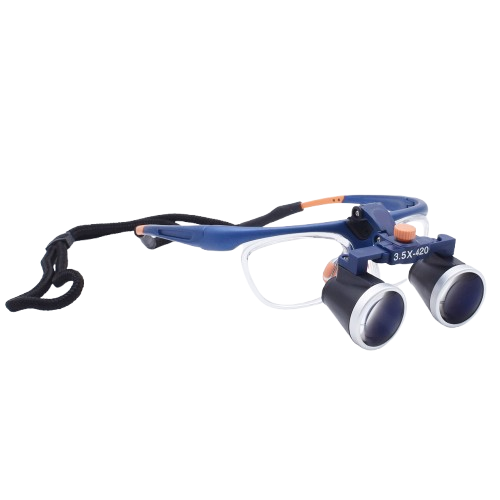
Most surgeons use magnification. Your light needs to play nice with your loupes. Whether you use Orascoptic, Designs for Vision, or a custom setup, look for a universal clip or a dedicated mount.
A secure dental loupe light attachment is critical—nothing is more annoying than a light that wobbles every time you move your head. The light beam must align perfectly with the convergence angle of your loupes.
5. Ergonomics & Comfort: Surviving the 12-Hour Case
I’ve said it before: Ergonomic headband comfort is more important than brightness. You can have the brightest light in the world, but if it gives you a migraine in hour two, it’s useless.
Weight Distribution (The Counterbalance)
The “Heavy Head” Syndrome isn’t caused by total weight; it’s caused by imbalance.
- Front-heavy: Causes you to engage your posterior neck muscles constantly to hold your head up.
- Balanced: Good headlamps place the battery pack on the back of the head (occipital region). This acts as a counterweight to the optics on the front. This “teeter-totter” balance makes the unit feel significantly lighter than it actually is.
Cranial Support
Look for a “dual-strap” or “rigid” system.
- Single Strap: Requires you to tighten it like a tourniquet to stop it from slipping down your nose. This causes “compression headaches.”
- Cross-Cranial Support: A rigid top strap allows the weight to rest on top of your head, so you can keep the circumference strap loose. It floats on the head rather than clamping it.
Padding Materials
Sweat management is real. Leather pads are durable but can get slippery and require specific cleaning agents. Mesh or “AirPad” technologies breathe better. Memory foam offers the best contouring but needs to be easily cleanable for hygiene.
6. Battery Life & Power Management (For the Cordless Surgeon)
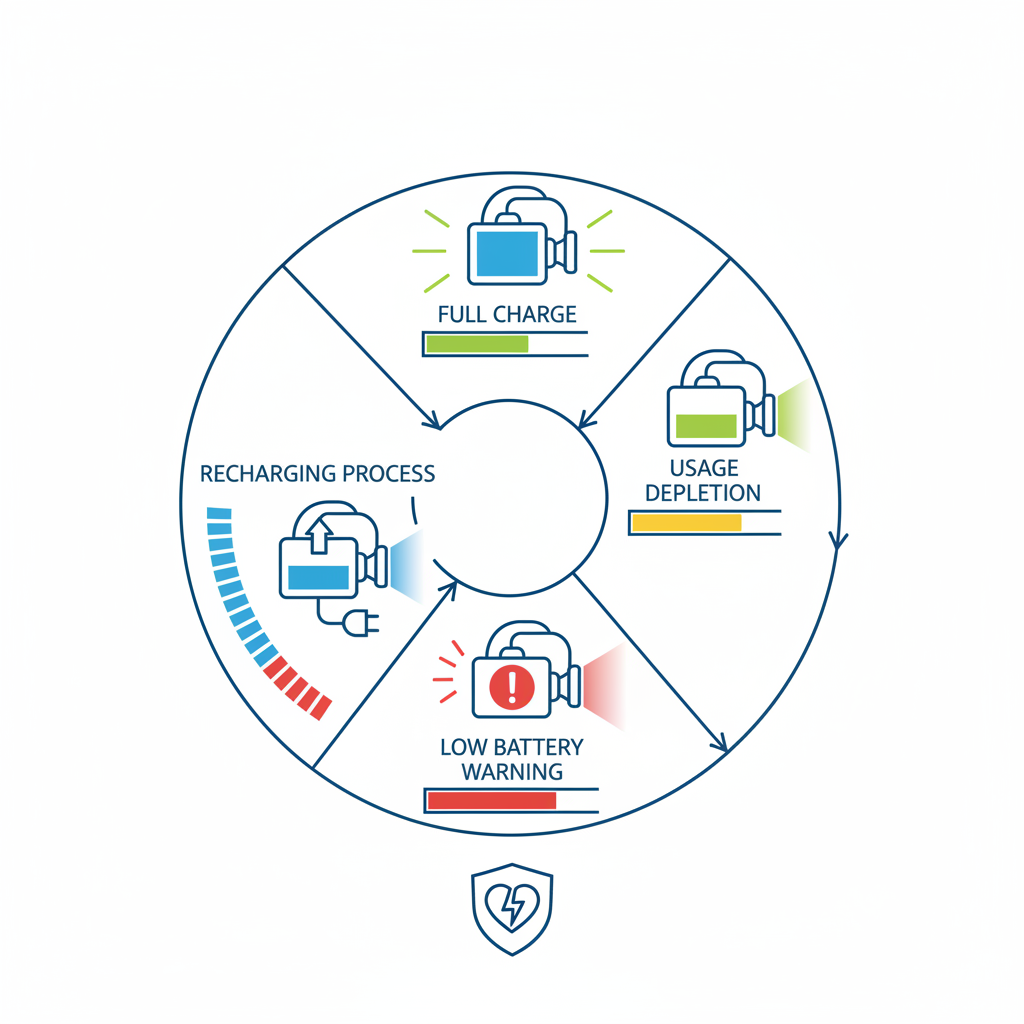
If you are going cordless, cordless medical headlight battery life is your fuel gauge.
Runtime Reality vs. Specs
Manufacturer claims are often based on “medium” intensity. At full blast (100% intensity), a standard lithium-ion battery might last 2-3 hours.
- Check the specs: Does the runtime match your average procedure length?
- Degradation: Lithium batteries lose capacity over years.
- Reliability: For reliable power management, high-quality cells like those used in the KD-203AY-7 series are essential.
The “Dimming Curve” Danger
Cheap batteries lose voltage as they drain, causing the light to slowly dim throughout the surgery. You might not notice it until you realize you’re squinting. Professional units have constant current drivers—meaning the light stays at 100% brightness until the battery is fully dead.
The “Hot-Swap” Advantage
I cannot stress this enough: Dual-battery systems are non-negotiable for long surgeries. You need a system that lets you swap the battery on the fly. If the light dies and you have to de-scrub to change it, that’s a clinical failure.
Charge Time & Indicators
You need a visual fuel gauge. A series of small LEDs on the battery pack telling you if you have 25%, 50%, or 75% charge left is a basic requirement. Also, look for fast-charging docks that can get a battery from 0% to 80% in under an hour.
7. Specialty-Specific Recommendations
One size does not fit all. A dentist has different needs than a neurosurgeon. Here is what I recommend based on your specialty.
Neurosurgery & Spine
- The Need: Neurosurgery deep cavity illumination. You are working in deep, dark holes.
- The Spec: You need maximum Lux (100,000+) and a very tight, focusable spot (10mm-20mm).
- The Tip: Weight is a factor, but brightness wins here. A corded system or a heavy-duty belt-pack LED is often preferred to punch light 12+ inches into a cavity.
ENT & Otolaryngology
- The Need: Mobility and coaxial alignment.
- The Spec: You are looking down narrow tubes (ear canals, throats). If the light isn’t perfectly coaxial (aligned with your eyes), you won’t see the tympanic membrane; you’ll just see the shadow of the ear canal.
- The Tip: A lightweight, cordless model is ideal for moving quickly between exam rooms.
Dentistry & Hygiene
- The Need: Color accuracy and curing safety.
- The Spec: You generally want a slightly warmer light or a curing filter (orange filter). Standard blue-heavy LEDs can prematurely cure composites before you are ready.
- The Tip: Portable LED surgical lighting that mounts directly to loupes is the standard here. You rarely need a full headband helmet unless you are an oral surgeon.
Veterinary Surgery
- The Need: Versatility and Durability.
- The Spec: Vets deal with everything from tiny kittens to Great Danes. You need a huge range of spot adjustability.
- The Tip: Durability is key here. Animals move, fluids splash. Look for a rugged housing that is easy to wipe down.
8. Brand Wars: Top Contenders in the Market
The market is crowded. Here is a quick landscape analysis to help you orient yourself.
The Heavyweights
- MedLED (Spectra): Famous for being one of the first truly cordless “halo” style lights. They offer great battery life, but the units can be bulky for some petite surgeons.
- Sunoptic (Titan): Known for raw power. If you need brightness that rivals a Xenon tower, this is where you look. They are heavy-duty.
- Enova: Their belt-pack systems are legendary for durability and extreme battery life, though they still rely on a cable from the head to the belt.
The Value & Performance Champions
- Ary Medical: This is where smart buyers look. We balance professional specs (high CRI, hot-swappable batteries, custom optics) without the massive markup of the legacy giants. Manufacturers like Ary are providing serious value for private practices and distributors looking for reliable OEM solutions.
- Burton & Welch Allyn: Reliable, standard-issue gear often found in hospitals. Solid, but perhaps lacking the cutting-edge features of the specialist brands.
9. The Ultimate Buying Checklist: 6 Factors to Check Before You Buy
Don’t swipe that credit card until you can answer “Yes” to these 6 questions:
- Brightness: Does it exceed 40,000 Lux at your specific working distance (not just at the source)?
- Battery Strategy: Can you swap batteries without taking the unit off? Do you get two batteries in the box?
- Comfort: Have you seen the weight specs? Is it balanced (battery at the back)?
- Spot Quality: Is the edge-to-edge uniformity clean? (Turn it on against a white wall—if you see a yellow ring or a dark center, walk away).
- Durability: Are the hinges reinforced? If it falls off the table, will the housing crack?
- Support: What is the warranty? If it breaks, is there a service center?
![Image: Checklist graphic with checkmarks for easy reviewing]
10. Cost Analysis: Investment vs. Expense
Medical headlamp cost analysis is tricky. You will see options on eBay for
300andprofessionalunitsfor4,000.
The Sticker Price
- Entry Level (300−800): Often dental loupe attachments. Good for hygiene, maybe simple exams. Beware of poor battery life.
- Mid-Range (1,000−2,500): Professional cordless LED systems. The sweet spot for most surgeons. Good balance of durability and performance.
- High-End (3,000−7,000): Specialized neuro/cardiac systems with advanced optics and belt packs.
Total Cost of Ownership
Think about the consumables. Old Xenon bulbs cost hundreds of dollars and burn out every 500 hours. Fiber optic cables snap and cost $200 to replace. LEDs last 50,000 hours. A cordless LED system pays for itself in bulb savings alone over 3-4 years.
The ROI of Comfort
This is the hidden cost. What is the value of not having neck surgery in 10 years? Investing in a lightweight, ergonomic, hands-free surgical illumination system is investing in your own body. If a $2,000 headlamp extends your career by 5 years, the ROI is infinite.
11. Conclusion: Lighting the Way Forward
We’ve covered a lot—from the physics of high CRI tissue color rendering to the practicalities of battery swapping.
Here is the bottom line: Your headlamp is the single most important tool you own. You can’t treat what you can’t see. Whether you choose the infinite mobility of a cordless unit or the raw power of a corded belt pack, prioritize the quality of the light and the comfort of the fit.
My Final Advice:Never buy based on a spec sheet alone. Always ask for a “Test Drive.” Any reputable manufacturer will let you demo a unit for a week. Wear it during a long case. See if your neck hurts. See if the battery lasts.
What next?If you want to explore professional-grade options that don’t break the bank, check out our full range of surgical headlights here .
Do you have questions about specific models for your specialty? Contact us today —we’d be happy to help you find the perfect light for your OR.