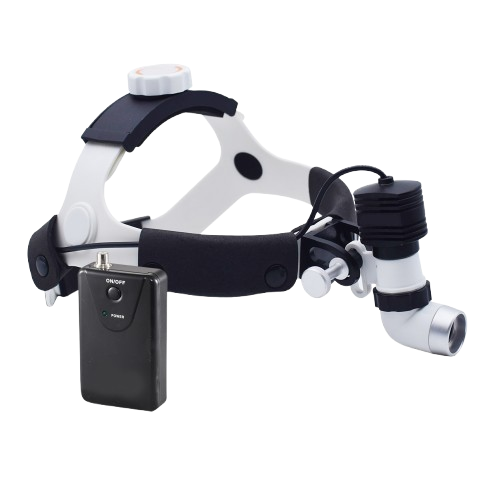
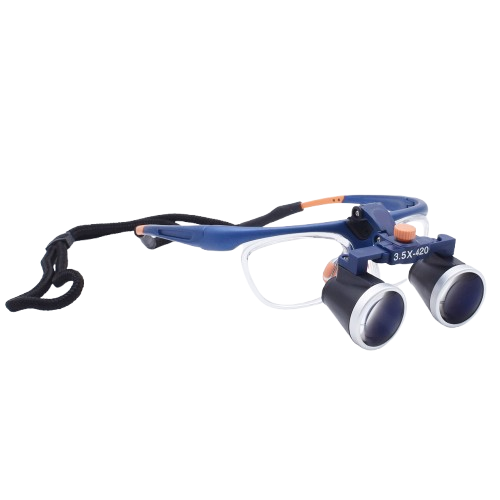
In the high-stakes theater of the operating room (OR), visual acuity is synonymous with patient safety. There is no room for ambiguity when a millimeter can define the difference between a successful recovery and a life-altering complication. Yet, for decades, surgeons have waged a silent war against their own infrastructure, battling the inevitable shadows cast by traditional overhead rigs. These static giants often fail to penetrate deep cavities, forcing surgical teams into a disruptive dance of manual adjustments that break concentration. This operational friction reduction is driving a quiet revolution in healthcare.
Hospitals are increasingly abandoning reliance on fixed lighting in favor of head-mounted surgical illumination, a shift powered by lumen-dense optics and the unparalleled precision of coaxial beam fidelity. By tethering light to the surgeon’s gaze rather than the ceiling, the industry is redefining what it means to see clearly. As we explore the limitations of legacy systems, we will uncover why the future of surgical excellence is becoming personal, portable, and brilliantly precise.
This shift isn’t just a trend; it’s a fundamental upgrade to hospital infrastructure. From ambulatory surgical centers to major trauma units, the adoption of LED surgical illumination is changing how medical professionals approach their work, prioritizing surgeon ergonomics, patient safety, and operational efficiency.
I. From Candles to LEDs: The Evolution of Surgical Vision
To understand the magnitude of the current shift, we must first look at the history of struggle that characterizes surgical lighting. The evolution of operative visibility has been a slow climb from darkness into light.
A History of Struggle
In the 19th century, scheduling a surgery was as much about the weather forecast as it was about the patient’s condition. Procedures relied on natural daylight, utilizing amphitheaters with large windows and mirrors to direct the sun. When electricity arrived, it brought the incandescent bulb, followed by the halogen era. While halogen lamps were a massive leap forward, they introduced new problems: intense heat that could dry out exposed tissue and make the OR unbearable for the surgical team, and a yellow-hued light that often distorted the color of anatomical structures.

Figure 1: The transition from static, shadow-prone overhead lighting (left) to dynamic, surgeon-controlled head-mounted illumination (right).
The Halogen Era vs. The LED Revolution
The transition from halogen to Light Emitting Diode (LED) technology was not merely an upgrade; it was a transformation. Halogen bulbs operate by incandescence, wasting nearly 80% of their energy as heat. In contrast, modern LED surgical illumination is “cool” lighting. It drastically reduces the thermal load in the operating theater, protecting patient tissue from desiccation and keeping the surgeon cool under pressure.
However, the most significant shift wasn’t just the source of the light, but its location. The industry moved from the philosophy of “flooding the room with light” to “targeting the tissue.” This marked the portable turning point—the moment medical technology shifted from fixed infrastructure to portable operating room lighting, granting surgeons autonomy over their visual field. High-quality surgical headlights have now become the gold standard for providing this autonomy.
II. The “Shadow Effect”: Why Ceiling-Mounted Lights Are Losing Ground
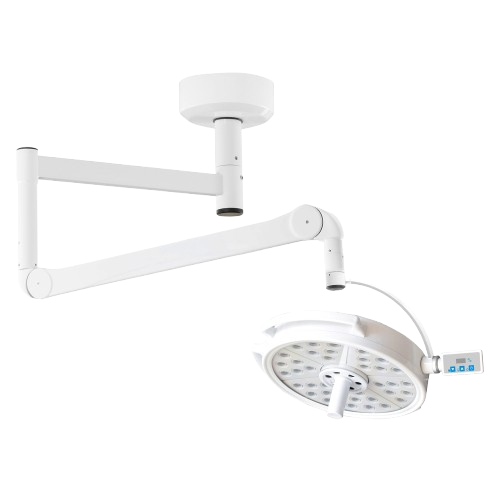
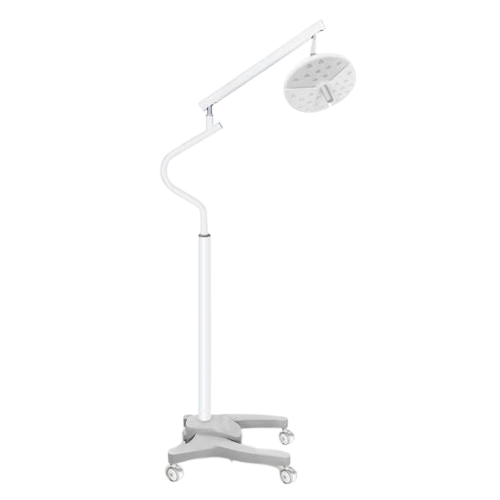
Despite advancements in overhead boom arms and multi-head reflector designs, traditional ceiling-mounted lights suffer from an inescapable flaw: the physics of obstruction.
The Physics of Obstruction
In an open surgery, the light source is typically positioned above the patient. The surgeon, by necessity, must position themselves between the light and the patient. Inevitably, the surgeon’s head, shoulders, hands, and instruments intercept the beam. This creates the “Shadow Effect”—a darkening of the precise area where visibility is most critical. This phenomenon leads to operating room shadows that obscure the surgical site exactly when clarity is needed most.
To mitigate this, overhead systems use multiple light heads to create overlapping beams. While this reduces hard shadows, it creates a diffuse “contour shadow” that can flatten the appearance of the surgical site, reducing depth perception.

Figure 2: A visual comparison demonstrating how overhead lights cast shadows (left) versus the shadow-free clarity provided by head-mounted systems (right).
The Disruption of Manual Adjustment
The “Shadow Effect” leads to a significant workflow inefficiency: the adjustment dance. Every time a surgeon shifts position to get a better angle, they block their own light. This forces a pause. The surgeon must reach up (risking sterility if not careful with the sterile handle) or instruct a circulating nurse to reposition the boom.
Studies suggest that surgeons using overhead lights adjust them every 7.5 minutes, affecting roughly 64% of productivity. These micro-interruptions break the cognitive flow of the procedure. In contrast, head-mounted surgical lights eliminate this friction entirely. The light is always exactly where the surgeon is looking, creating a seamless visual experience.
The Deep Cavity Dilemma
The limitations of ambient overhead light are most acute in deep cavity procedures. In neurosurgery, thoracic surgery, or complex ENT procedures, the surgical site is often a narrow channel. Overhead light, coming from a wide angle, hits the walls of the incision but leaves the bottom in darkness. This is where shadow-free surgical lighting becomes a necessity, not a luxury. Models specifically designed for these scenarios, like the KD-203AY-7 , provide the focused intensity required to penetrate these dark recesses without washing out the surrounding tissue.
III. The Core Advantage: Co-Axial Illumination and Precision
The technical superiority of head-mounted systems lies in the principle of co-axial illumination. This is the definitive answer to the shadow problem and the key to true surgical precision lighting.
Defining Co-Axial Lighting
Co-axial lighting creates a “shadow-free” environment by aligning the light source with the surgeon’s visual axis. Because the light originates from between the surgeon’s eyes (or directly above the bridge of the nose), the beam path is virtually identical to the line of sight. This is often referred to as coaxial beam fidelity.
If the surgeon can see a structure, that structure is illuminated. Even when reaching deep into a cavity with instruments, the light travels past the obstruction at the same angle as the surgeon’s vision, effectively peering “around” the tools.

Figure 3: Co-axial illumination aligns the light beam with the surgeon’s vision, ensuring that deep cavities remain brightly lit even during complex maneuvering.
IV. Visual Acuity and Tissue Differentiation
Beyond shadow reduction, the quality of the light itself is paramount. Visual acuity in surgery isn’t just about brightness; it’s about information.
High CRI and True-to-Life Color
Modern LED optics boast a high Color Rendering Index (CRI). CRI measures a light source’s ability to reveal the faithful colors of objects compared to natural sunlight (CRI 100). In the body, the difference between a nerve, a vessel, and a tendon is often a subtle variation in shade. High CRI headlights (typically 90+) allow for true-to-life color reproduction, enabling faster and more accurate tissue differentiation.
Edge-to-Edge Clarity
Inferior lighting often has a “hot spot” in the center and rapid fall-off at the edges, causing eye strain as the surgeon’s eyes constantly adjust between bright and dim zones. Premium systems utilize lumen-dense optics to provide edge-to-edge clarity, ensuring the entire spot is uniformly lit. This uniformity is crucial for reduced eye fatigue during marathon sessions.
V. Ergonomic Liberation: Surgeon Comfort and Long-Term Health
For years, the argument against headlights was weight. “Cervical strain” was a common complaint among surgeons who wore heavy fiber-optic headsets tethered to wall units. However, modern engineering has transformed the ergonomic landscape, turning ergonomic surgical tools into a standard requirement for staff retention and health.
The Physical Toll of Surgery
Surgeons are industrial athletes, often holding static postures for hours. Musculoskeletal disorders are rampant in the profession, often exacerbated by “the turtle pose”—craning the neck forward to compensate for poor lighting. By delivering high-intensity light directly to the field, modern headlamps allow surgeons to maintain a more neutral, upright cervical spine posture.
Weight Distribution and Balance
Current designs utilize featherweight materials like aircraft-grade aluminum and carbon fiber. More importantly, the balance has shifted. By placing lightweight battery packs at the rear of the headband, manufacturers create a counter-balance to the optical module in the front. This even weight distribution prevents the “front-heavy” sensation that causes neck fatigue. For instance, the KD-205AY-1 is engineered specifically for lightweight comfort without sacrificing luminosity, making it ideal for procedures where head mobility is frequent.
VI. The Wireless Revolution: Breaking the Tether
Perhaps the most liberating advancement in head-mounted surgical illumination is the severance of the cord. The rise of wireless surgical headlights has fundamentally changed OR dynamics.
The End of the Fiber Optic Cable
Historically, powerful headlights required a fiber-optic cable connecting the surgeon to a massive light source box on a cart. This cable was a “leash.” It restricted movement, created a constant pulling sensation on the head, and posed a significant trip hazard in the crowded OR.
Battery Tech Advancements
The rise of battery-powered surgical lights is fueled by lithium-ion technology. Modern batteries are not only lighter but denser in energy capacity.
- Hot-Swappable Batteries: Many systems now feature “hot-swap” technology, allowing a circulating nurse to replace a depleted battery with a fresh one without the light ever flickering out.
- All-Day Run Times: With efficient LEDs, a single charge can now last through marathon procedures.
Advanced systems like the KD-205AY-2 exemplify this wireless freedom, offering high-intensity output that rivals tethered units, ensuring that wireless surgical headlights are viable for even the most complex neurosurgeries.

Figure 4: Modern wireless systems feature hot-swappable battery packs and lightweight designs, eliminating trip hazards and offering complete mobility.
VII. Financial Diagnosis: The ROI of Head-Mounted Systems
For hospital administrators, the switch to head-mounted illumination is not just clinical; it is financial. When analyzing the medical device ROI, head-mounted systems present a compelling case against total reliance on overhead upgrades.
Upfront Cost vs. Long-Term Savings
Refitting an Operating Room with new LED ceiling booms is a massive capital expenditure, often costing tens of thousands of dollars per room, plus installation downtime. In contrast, outfitting a surgical team with high-end headlights is a fraction of the cost.
Energy Efficiency and Maintenance
The operational savings are distinct:
- Bulb Replacements: Traditional halogen overheads require frequent bulb changes, which are expensive and require maintenance labor. LEDs are rated for 50,000+ hours—essentially the life of the unit.
- Energy Consumption: A hospital in the Midwest reported a 25% reduction in energy consumption after switching to LED sources.
- HVAC Load: Because LEDs emit negligible heat, the OR’s climate control system doesn’t have to work as hard to maintain the low temperatures required for sterility, further reducing utility costs.
Operational Efficiency
Time is money in the OR. Reducing the “adjustment time” of overhead lights and minimizing errors leads to shorter procedure times. Faster turnover means more cases per day, directly impacting the hospital’s revenue stream.
VIII. Clinical Impact: Real-World Case Studies and Statistics
The theoretical benefits of surgical headlights are backed by hard data and global field application. The surgical lighting adoption trends clearly point toward personal illumination.
- Safety Correlation: A pivotal study cited a 30% reduction in lighting-related accidents following the adoption of focused headlight technology. When surgeons can see better, they cut safer.
- Global Resilience: The Lifebox Surgical Headlight Project illustrates the durability of these devices. In resource-constrained settings like Ethiopia and Liberia, where overhead lights are often broken and power is intermittent, battery-powered headlights have become a lifeline, ensuring safe surgery continues even during blackouts.
- Market Growth: The demand is undeniable. The global surgical headlights market is projected to reach $845 million by 2035, growing at a CAGR of roughly 7%. This growth is largely driven by the North American adoption of Ambulatory Surgical Centers (ASCs), which prefer the cost-effectiveness and mobility of headlights over heavy infrastructure.
IX. Minimally Invasive Surgery (MIS): The Driving Force
The global trend toward Minimally Invasive Surgery (MIS) is a primary accelerator for headlight adoption. Minimally invasive surgery lighting presents unique challenges that overheads simply cannot meet.
Small Incisions, Big Light Needs
MIS techniques rely on “keyhole” incisions. Trying to illuminate the abdominal or thoracic cavity through a 2-inch incision using ceiling lights is optically impossible; the light simply hits the skin. Lumen-dense optics provided by headlights can project a tight, intense beam straight down the channel, ensuring deep cavity illumination.

Figure 5: Visualization of how coaxial light penetrates deep, narrow surgical cavities where overhead ambient light cannot reach.
Specialty-Specific Adoption
- Neurosurgery & Spine: These specialties have the highest adoption rates (approx. 22% of market share) due to the depth and narrowness of the operative field.
- ENT & Dental: Procedures occur in natural cavities where shadows are inherent.
- Cardiovascular: Requires intense, shadow-free light for suturing delicate vessels.
X. Addressing the Skeptics: Overcoming Adoption Challenges
Despite the advantages, some surgical teams remain hesitant. Addressing these concerns is vital for successful implementation.
“It’s Too Heavy”
- Rebuttal: This is a hangover from the fiber-optic era. Modern LED units often weigh less than 6 ounces. When properly fitted with ergonomic headbands, they are barely perceptible.
“The Battery Will Die”
- Rebuttal: Backup protocols are standard. Systems now come with “fuel gauges” indicating remaining charge, and audible warnings give ample time (usually 20 minutes) to swap a battery.
“It’s Too Bright / Too Glary”
- Rebuttal: High-quality units feature precision intensity controls. Surgeons can dial down the brightness to reduce reflective glare on wet tissue, or use polarization filters.
Hygiene and Sterility
- Rebuttal: Touch-free designs and sterile adjustment knobs allow surgeons to control their own light without breaking the sterile field. This autonomy is a significant safety upgrade.
XI. Head-Mounted vs. Ceiling-Mounted: A Comparative Summary
The future of the OR is likely a hybrid model, but the primary source of surgical light is shifting.
| Feature | Ceiling-Mounted Lights | Head-Mounted Surgical Lights |
|---|---|---|
| Shadow Control | Poor (prone to obstruction) | Excellent (Co-axial/Shadow-free) |
| Mobility | Fixed / Limited boom range | Unlimited (moves with surgeon) |
| Deep Cavity Visibility | Low | High |
| Heat Generation | High (Halogen) / Low (LED) | Negligible (Cool LED) |
| Cost of Ownership | High (Install + Maintenance) | Low (One-time purchase) |
| Workflow Impact | Disruptive manual adjustments | Seamless / Hands-free |

Figure 6: A summary of the ergonomic, visual, and financial benefits of modern head-mounted illumination.
XII. Conclusion: The Future of the Operating Room is Personal
The shift from static overhead beams to dynamic, head-mounted surgical illumination is not a fleeting trend; it is a necessary evolution in medical technology. It represents a move toward personalized, precision medicine where the tools adapt to the surgeon, not the other way around.
By eliminating shadows, reducing the physical toll on the surgical team, and offering a high-ROI alternative to aging infrastructure, surgical headlights are improving the three pillars of healthcare: patient safety, surgeon comfort, and hospital economics.
As Ambulatory Surgical Centers rise and complex minimally invasive surgeries become the norm, the “big lights” of the past are dimming in relevance. For modern hospitals, the decision is clear: to see the future of surgery, you have to wear it.
Call to ActionIs your Operating Room infrastructure supporting or hindering your surgical teams? We encourage hospital administrators and clinical leads to audit their current lighting setups. Explore the advantages of surgical headlights and consider a trial of modern LED solutions to experience the difference in precision and fatigue reduction firsthand.
Disclaimer: The information provided in this article is for educational purposes and reflects the current state of medical technology trends. Specific product performance may vary by manufacturer.