Picture the scenario: You are deep in a complex procedure, scalpel in hand, when a slight shift of your shoulder casts the critical incision site into darkness. You pause, breaking your flow to readjust a drifting handle, battling the “black hole” shadow just when precision matters most. This common frustration underscores why healthcare facility lighting choices are far more than a logistical item; they are a direct factor in patient safety and surgeon fatigue.
Effective operating room illumination isn’t merely about brightness; it is a high-stakes balance of lumen density and precise chromatic rendering that allows tissue differentiation. Whether you are struggling with the limitations of fixed booms or exploring medical headlight advantages, the wrong configuration can hinder workflow. In this guide, we dissect the complete landscape of surgical lighting solutions. We will navigate the overhead OR lights pros cons, evaluate portability, and analyze the technical specs to help you decide which investment truly serves your surgical team.
The Quick Answer (Featured Snippet)
For facility managers and surgeons needing an immediate verdict: There is rarely a singular winner in the debate between surgical headlamps and overhead fixtures. Overhead OR lights provide the essential, high-intensity ambient coverage required for general safety and broad-field visualization. However, surgical headlamps are indispensable for deep-cavity procedures and ensuring surgeon portability in lighting. The best surgical lighting solutions almost always involve a hybrid ecosystem: high-quality LED surgical lights for the room’s base illumination, paired with personal, high-performance headlamps for specific, narrow-access tasks.

The Evolution of Operating Room Illumination
Do you remember the operating rooms of twenty years ago? They were often sweltering environments, heated by the sheer thermal output of massive halogen bulbs. The light was yellow, the shadows were harsh, and the risk of drying out exposed tissue was a constant concern. We have come a long way since then, moving rapidly into the era of energy-efficient surgical lights.
The shift from halogen to LED (Light Emitting Diode) wasn’t just about saving money on electricity bills—though that was a nice bonus for administrators. It was about rewriting the surgical lighting standards. Modern LEDs offer “cold” light, significantly reducing the radiant heat in the surgical field. This evolution addressed a critical patient safety issue: thermal tissue damage.
But the modern requirement goes beyond just temperature. Today’s complex surgeries demand more than just raw brightness. They require shadow-free surgical lighting and adjustable brightness medical lights that can adapt instantly to the reflectivity of the tissue. Whether a surgeon is working on highly reflective bone or light-absorbing liver tissue, the illumination must be modifiable to prevent glare and eye fatigue. We are no longer just “lighting a room”; we are engineering an environment for optical precision.
The Heavyweights: Pros and Cons of Ceiling-Mounted OR Lights
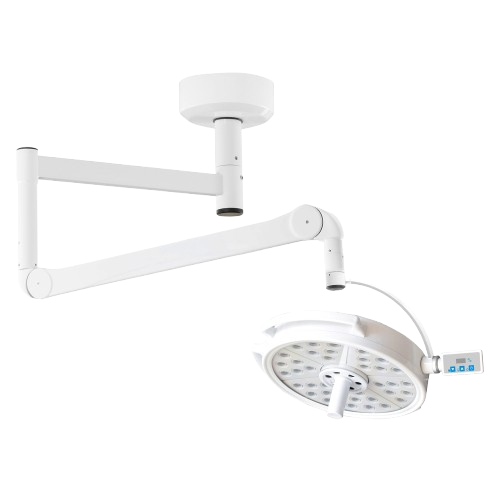
Let’s talk about the traditional heavy hitters: ceiling-mounted OR lights. These are the sun of the operating room universe. When you walk into a major trauma center, the size and sophistication of the overhead booms often signal the facility’s capability.
The Power of Intensity
The primary argument for overheads is sheer power. When we discuss surgical light intensity, measured in Lux, large overhead heads can easily generate 160,000 Lux or more. This provides a flood of light that covers the patient from head to toe if necessary. For general surgery, C-sections, or orthopedic procedures involving large limbs, this broad coverage is non-negotiable.
Shadow Management via Geometry
Have you ever wondered how these lights eliminate shadows? It’s simple geometry. By positioning multiple light heads (or a single head with multiple LED arrays) at convergent angles, the system dilutes shadows. If a surgeon’s head blocks 20% of the light coming from the left, the remaining 80% coming from the right and center fills in the gap. This is the essence of shadow-free surgical lighting.
Infection Control Implications
However, we must address the elephant in the room: infection control OR lighting. Overhead lights are suspended on massive articulated arms and booms. These surfaces are magnets for dust if not rigorously cleaned. Furthermore, the handles used to adjust these lights mid-surgery must be sterilized or covered with disposable sterile sheaths. Every time a surgeon reaches up to adjust the light, there is a micro-risk of breaking the sterile field.
The Downside: The “Drift”
Ask any veteran surgeon about their biggest pet peeve, and they will likely mention “The Drift.” This occurs when the mechanical brakes in the boom arm wear out, causing the light to slowly sag or drift away from the target site. It leads to a comical yet dangerous dance where the circulating nurse has to keep pushing the light back into place. Additionally, despite multi-head designs, if the surgeon leans directly over a deep cavity, their own head will eventually block the overhead photons. This is the physical limit of ceiling-mounted options.
The Agile Contender: Medical Headlight Advantages
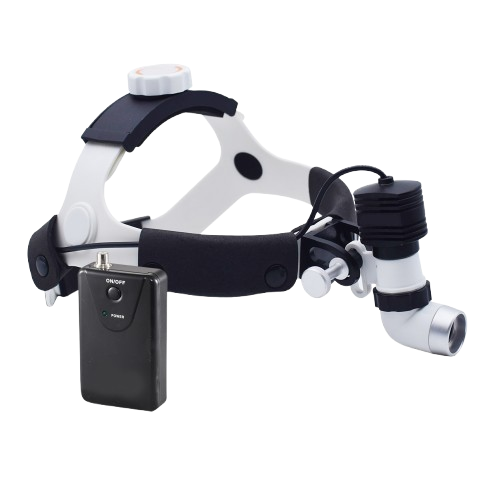
Enter the challenger: the surgical headlight. If overhead lights are the artillery, headlamps are the snipers. They offer a level of surgeon portability in lighting that fixed systems simply cannot match. If you are considering an upgrade to your personal gear, you should explore our surgical headlamps to understand how they can enhance your visual field.
Point-of-View Precision
The most significant of the medical headlight advantages is coaxial illumination. The light beam originates from between the surgeon’s eyes (or just above them), meaning the light is always perfectly aligned with the surgeon’s vision. Wherever you look, there is light. There are no shadows cast by your own head, your hands, or your assistant’s shoulders. The light goes exactly where your eyes go.
Cordless vs. Tethered
Historically, headlamps were tethered by fiber optic cables to a heavy light source box. These fiber optic headlamps were incredibly bright but restricted the surgeon’s movement, creating a tripping hazard and literally “tethering” them to the table. The revolution has come in the form of cordless surgical headlights. With advancements in battery density, surgeons can now wield powerful LED beams with zero cables—you can check out the KD-205AY-2 model to see how this works in practice—allowing for complete freedom of movement around the operating table.
Deep Cavity Visualization
This is where headlamps win, hands down. In procedures like spinal surgery, neurosurgery, or deep-pelvic work, the incision might be small, but the target is deep. Overhead lights, coming from wide angles, hit the edges of the incision and leave the bottom in shadow. A headlamp shoots a focused beam straight down the “tunnel,” illuminating the critical anatomy at the bottom of the cavity.
Mobility Factors
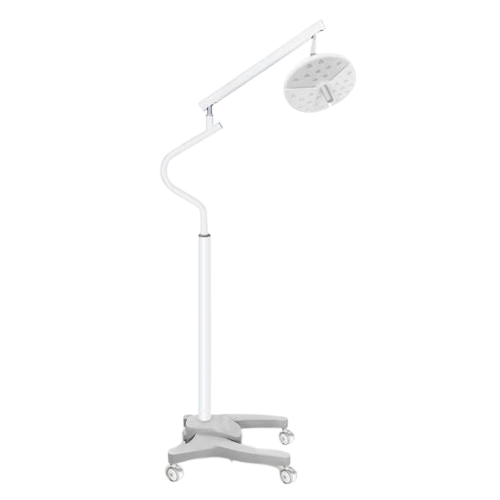
For dynamic environments, such as Emergency Rooms with multiple bays, mobile surgical lights are essential. A surgeon wearing a high-quality headlamp can move from a trauma bay to an OR suite without waiting for equipment to be set up.
Technical Showdown: Color, Heat, and Intensity
To make an informed choice, we have to get technical. We need to look at the physics of light, specifically color temperature in surgery and rendering capabilities.
Color Temperature (Kelvin)
Light color is measured in Kelvin (K). Old halogen bulbs sat around 3200K (a warm, yellowish light). Modern LEDs typically range from 4500K to 6500K (cool white to daylight). Why does this matter? Contrast. Cool white light increases contrast, helping the eye pick out details. However, some tissues can look “washed out” under light that is too blue. The best systems offer variable temperature control.
CRI (Color Rendering Index)
This is arguably the most critical metric. CRI measures a light source’s ability to reveal the true colors of an object compared to natural sunlight. In an office, you might not care if a red apple looks slightly brown. In surgery, distinguishing between oxygenated arterial blood, dark venous blood, and pink tissue is a matter of life and death. High-end LED surgical lights boast a CRI of 95+, ensuring chromatic rendering is accurate.
Heat Management
We touched on this earlier, but the concept of the “cool beam” is vital. While the LED chip itself generates heat (which must be dissipated via heat sinks in the headlamp or light head), the beam it projects is free of infrared radiation. This prevents the “baking” of the patient’s tissue during long procedures, which can lead to rapid desiccation (drying out) and post-operative complications.
Human Factors: Ergonomics and Visual Fatigue
When we discuss ergonomic surgical lighting, we are really discussing the physical toll surgery takes on the human body.
The Weight on Your Shoulders
The classic complaint about headlamps is weight. A heavy battery pack on the back of the head or a heavy optic module on the front creates neck strain. Over a 4,000-hour career, this leads to chronic cervical spine issues. However, modern designs have focused heavily on weight distribution. The shift to lightweight lithium-polymer batteries and aircraft-grade aluminum optics has made cordless surgical headlights lighter than ever—take a moment to look at the KD-205AY-1 model , which is designed specifically to minimize this strain—but they still represent a physical load that overhead lights do not.
Visual Fatigue Surgeons Face
Eye strain is a silent killer of efficiency. It is often caused by constant adaptation. If the surgical site is blasted with 160,000 Lux, but the rest of the room is dark, the surgeon’s pupils are constantly dilating and constricting every time they look up at the monitor or the nurse. This causes headaches and fatigue. Ambient light reduction OR modes (often green or blue ambient lighting) help bridge this gap, reducing glare on monitors while maintaining enough light for the staff.
The “Reach” Factor
Consider the physical ergonomics of the overhead light. To adjust it, a surgeon must raise their arms above shoulder level. Doing this 20 times a procedure adds to shoulder fatigue. A headlamp requires no reaching; it is simply always there. This reduction in unnecessary movement is a subtle but powerful argument for wearable lighting.
Special Use Cases: One Size Does Not Fit All
A Level 1 Trauma Center has different needs than a cosmetic dentistry clinic. Let’s look at how context changes the decision.
Dental and Micro-Surgery
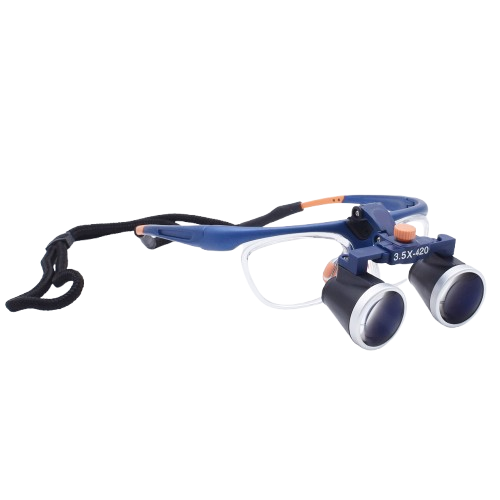
In dentistry and microsurgery, magnification is king. Here, we see the integration of dental loupes with light. You cannot rely on an overhead light when you are looking into a molar cavity; your head is always in the way. For these practitioners, a headlight mounted directly to the loupes is the only viable option. We recommend professionals in this field check out the KD-203AY-7 for a solution tailored to these specific needs.
Veterinary Applications
Veterinary surgical lighting often mirrors human medicine but operates on tighter budgets. While a referral vet hospital might afford ceiling booms, many general practices rely on mobile floor stands and headlamps. The anatomy of animals—often deep-chested breeds—makes the deep-cavity penetration of headlamps particularly valuable.
Trauma and Field Work
In disaster relief, military field hospitals, or rural clinics with unreliable power, mobile surgical lights are lifesavers. A battery-operated headlamp doesn’t care if the generator dies. For field medics and trauma surgeons working in “tents,” the headlamp is the primary, and often only, source of illumination.
The Business Case: Cost-Effectiveness of Surgical Lighting
For the administrators and procurement officers reading this: let’s talk numbers.
Upfront Investment
The investment in surgical lighting for a ceiling-mounted system is a massive Capital Expenditure (CapEx). It involves structural engineers, ceiling reinforcement, electrical contracting, and the cost of the units themselves. In contrast, headlamps are a moderate Operational Expenditure (OpEx) or minor equipment purchase. You can outfit an entire surgical team with top-tier headlamps for the cost of installing one dual-head ceiling system.
Maintenance of OR Lights
Overhead lights require maintenance contracts. Boom arms need tension adjustments, brakes need replacing, and despite LED longevity, the electronics eventually fail. Headlamps have a different maintenance profile: cables fray, and batteries degrade. However, replacing a battery is cheap; replacing a boom arm is not.
Energy Savings
Switching to energy-efficient surgical lights (LEDs) has a tangible ROI. Not only do they consume less power than halogens, but they also emit less heat. This lowers the load on the hospital’s HVAC system, which has to work less to keep the OR at the standard 68°F (20°C).
ROI Calculation
When does a 3,000headlamppayforitself?Ifitsavesasurgeon10minutesofadjustmenttimepercase,andORtimeisvaluedat
100 per minute, the ROI is realized very quickly. Furthermore, if it prevents a single post-operative infection by allowing better visualization of debris in a wound, the cost savings are exponential.
Comparison Matrix: Hospital Lighting Comparison
To visualize these differences, let’s break down the core metrics in a structured comparison.
| Feature | Ceiling-Mounted OR Lights | Surgical Headlamps |
|---|---|---|
| Brightness (Lux) | Extremely High (160k+) | High (50k – 200k) |
| Shadow Control | Multi-angle convergence | Coaxial (Line of Sight) |
| Deep Cavity View | Poor to Moderate | Excellent |
| Mobility | Fixed (Room Dependent) | 100% Mobile (Surgeon Dependent) |
| Sterility Risk | Touch-points on handles | Non-contact (once donned) |
| Ergonomics | Reaching overhead required | Neck weight/strain possible |
| Cost | High CapEx | Moderate OpEx |
| Power Dependency | Grid/Generator | Battery/Grid |
Maintenance and Longevity: Keeping the Lights On
A purchase is a promise to the future. How do these systems hold up?
Durability
Modern LED surgical lights typically are rated for 50,000+ hours of use. That is decades of surgery. The weak link in overheads is rarely the light engine; it is the suspension system. For cordless surgical headlights, the weak link is the lithium-ion cell. Facilities must plan for a battery replacement cycle every 2-3 years to ensure peak performance.
Sanitization
In the era of superbugs, cleaning is paramount. A smooth, encapsulated headlamp is easy to wipe down with cavi-wipes. Ceiling mounts, however, have crevices, joints, and expansive surface areas that gather dust high above the sterile field. Cleaning them requires ladders and dedicated time, which often gets neglected in a busy turnover schedule.
Spare Parts Logistics
From a facility management perspective, it is easier to stock spare batteries and fiber optic cables than it is to source specific PCBs or brake screws for a discontinued ceiling mount model.
Making the Choice: A Decision Framework
So, how do you decide? Here is a framework based on facility profile.
- The General Surgery/Trauma Suite: You need both. The overheads provide the ambient safety and broad abdominal illumination, while the headlamps are available for deep cavity work.
- The Neuro/Spine/ENT Center: Prioritize high-end surgical headlamps. The overhead lights here are almost secondary. The procedures are deep, narrow, and require the coaxial precision that only a headlamp provides.
- The Outpatient/ASC Center: If budget is tight, invest in high-quality mobile surgical lights (floor stands) and excellent headlamps. You may not need the massive infrastructure of ceiling mounts for hernia repairs and minor orthopedics.
- Budgeting: Allocate funds for best surgical lighting solutions by looking at the total cost of ownership. Do not just look at the sticker price; look at the cost of sterile handles, bulb replacements (if non-LED), and energy consumption.
Conclusion
The debate between overhead lights and headlamps is not truly a battle; it is a partnership. The overhead OR lights pros cons usually balance out the medical headlight advantages, creating a complementary relationship. The overhead light provides the canvas, and the headlamp provides the detail brush.
The Verdict: For a modern healthcare facility, the gold standard is a hybrid approach. Install quality ceiling-mounted OR lights to ensure standard-of-care illumination for the room and general field. However, do not force your surgeons to rely on them exclusively. Issue personal, high-quality cordless surgical headlights to your surgical staff, particularly those in specialties requiring deep visualization.
Call to Action: Before you sign that next purchase order, take a walk through your ORs. Audit your current lighting. Are the boom arms drifting? Are the surgeons complaining of visual fatigue? Survey your surgical team to understand their specific pain points. Their feedback will guide you away from generic specs and toward a lighting solution that truly enhances operational efficiency and patient safety.