LEAD IN
Let’s be real for a second: even the most skilled surgeon can’t operate on what they can’t see. If you’re managing procurement for a hospital or distributing medical gear, you know that in the Operating Room (OR), lighting isn’t just a utility—it’s a surgical instrument.
When a procedure enters the critical phase, and the overhead lights cast a shadow at the worst possible moment, the flow is broken. Here is everything you need to know about how modern surgical headlamps are changing the game for precision, efficiency, and surgeon comfort.

ANSWER SECTION
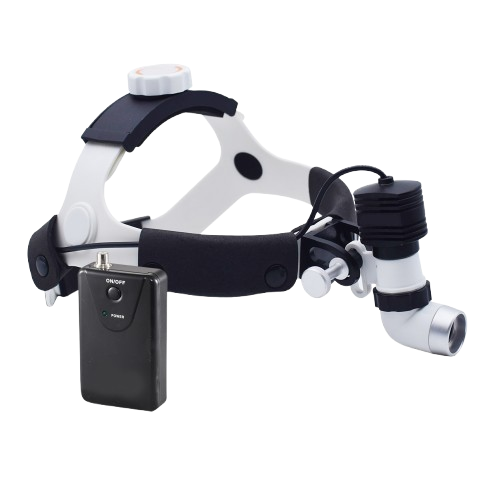
How do surgical headlamps improve precision and efficiency in healthcare? Surgical headlamps, particularly modern LED technology models, enhance precision by providing shadow-free lighting directly coaxial to the surgeon’s line of sight. This ensures deep cavity illumination where overhead lights often fail. They boost efficiency through hands-free illumination, eliminating the need for manual light adjustment during critical procedural steps. Furthermore, advanced operating room ergonomics are addressed through lightweight designs that minimize neck strain, contributing to significant surgeon fatigue reduction, while high Color Rendering Index (CRI) aids in accurate tissue differentiation.
READ ON
But there is so much more to the story than just “better light.” From the evolution of LED surgical headlamps to the specific benefits for neurosurgery and ophthalmology, I’m going to break down exactly why this technology is the smartest investment for a modern OR.
1. The Critical Role of Lighting in Modern Healthcare
We’ve all seen it—or at least heard the complaints from the OR staff. The surgeon is deep into a procedure, perhaps a complex abdominal exploration or a delicate spinal fusion, and they have to stop. They reach up with a sterile handle to yank the overhead boom light into a better position because their own head is blocking the beam.
It seems like a minor annoyance, but in the world of precision efficiency, those seconds add up. More importantly, every time a surgeon breaks focus to adjust lighting, the cognitive load increases and the flow of the procedure is interrupted. For distributors and procurement managers, understanding this pain point is key. You aren’t just selling a light; you are selling continuity.
The “Shadow Problem” in Traditional Surgery
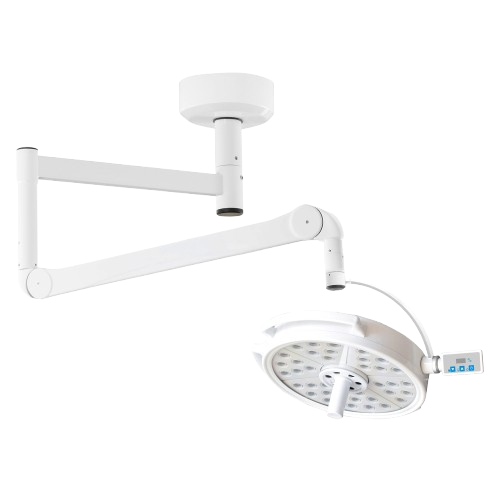
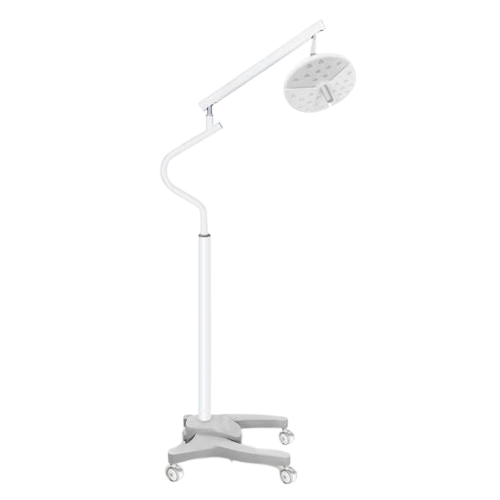
The fundamental flaw of traditional overhead operating theater lights is simple physics: the source of the light is located away from the axis of vision. As the surgeon leans in to get a closer look, their head, shoulders, or hands inevitably block the light path. This creates shadows exactly where illumination is needed most—in the surgical cavity.
Shadow-free lighting isn’t a luxury; it’s a necessity for avoiding errors. Modern headlamps solve this by aligning the light source directly with the surgeon’s eyes (coaxial illumination). Wherever they look, the light follows, penetrating deep into cavities without getting blocked by the surgeon’s own body.
Precision: The Difference Between Success and Complication
When we talk about precision, we are talking about microsurgical acuity—the ability to distinguish a nerve from a vessel, or healthy tissue from a tumor margin. In high-stakes environments, visual acuity is everything. If the lighting is dim or casts a yellow hue (common in older halogen systems), that differentiation becomes risky.
I’ve spoken with neurosurgeons who describe the difference between overhead lighting and high-quality advanced surgical lighting as the difference between driving in fog versus driving on a clear day. The contrast and sharpness provided by incident light allow for confident decision-making, which ultimately reduces procedure time and improves patient safety.
2. Technology Deep Dive: Inside the Modern Surgical Headlamp
Gone are the days of hot, heavy fiber optic cables tethered to a wall unit that limited movement. The industry has undergone a massive shift toward solutions that prioritize mobility and spectral accuracy. Let’s look at the tech that makes modern medical headlamps a powerhouse.

LED Technology: The Cool Revolution
Why did the industry shift so aggressively to LED? It’s not just about brightness—though that is a huge factor. It comes down to lumen dynamics, heat, and color.
- Heat Management: Traditional halogen lights emit significant infrared energy (heat). In a long surgery, this can actually dry out (desiccate) exposed tissue, which is bad for patient recovery. It also makes the surgeon sweat, which is a contamination risk. LED surgical lights run significantly cooler, protecting both the patient’s tissue integrity and the surgeon’s comfort.
- Color Accuracy (CRI): This is technical, but vital. The Color Rendering Index (CRI) measures how accurately a light source reveals the true colors of an object compared to natural sunlight. High CRI (>90) is essential for tissue differentiation. If a light is too blue or too yellow, a surgeon might miss the subtle pallor of necrotic tissue or the specific red of an artery.
- Longevity: From a procurement standpoint, this is huge. 50,000+ hours of life means less maintenance for your facility and fewer bulb replacements compared to Xenon or Halogen.
Wireless Freedom and Battery Tech
The tether is cut. The shift to hands-free illumination via battery power has revolutionized OR workflow.
- Hot-swappable batteries: Modern units allow staff to swap a depleted battery for a fresh one without taking the headset off or turning the light out. This ensures 24/7 uptime for critical trauma cases.
- Weight distribution: Early battery packs were heavy and mounted on the forehead. Today, we see designs like the KD-205AY-2 that optimize balance, ensuring the unit doesn’t feel “front-heavy.”
Adjustable Brightness and Spot Focus
One size does not fit all. A cardiac surgeon working on a large open chest cavity needs a wide flood of light. An ENT specialist working in the nasal passage needs a tight, intense spot. Top-tier headlamps offer the ability to tweak adjustable brightness and spot size instantly. This adaptability is critical when transitioning between different stages of a surgery or between different specialties sharing the same equipment.
3. Operating Room Ergonomics: Fighting Surgeon Fatigue
Surgery is an endurance sport. It is not uncommon for procedures to last 6, 8, or even 12 hours. In this context, a heavy, unbalanced headlamp isn’t just uncomfortable—it’s a health hazard for the physician. Distributors who understand operating room ergonomics find it much easier to communicate value to hospital staff.

The “Weight” of the Issue
Chronic neck and back pain are occupational hazards for surgeons. This is often caused by the “cantilever effect”—where a heavy light on the forehead forces the surgeon to engage neck muscles constantly to keep their head up. We compare old halogen headsets vs. modern lightweight designs to see the difference.
- Cranial Support: Modern ergonomic surgical lights utilize “two-point” or “occipital” support bands that distribute weight evenly across the skull, rather than resting it all on the nose bridge or forehead.
- Low-Profile Design: Reducing the physical profile of the lamp reduces the lever effect on the cervical vertebrae. For lighter applications, models like the KD-203AY-7 offer incredible illumination with almost negligible weight penalties.
Reducing Eye Strain
It’s not just physical weight; it’s visual weight. We need to discuss how uniform, edge-to-edge brightness prevents the surgeon’s eyes from constantly adjusting between light and dark spots. This constant pupillary adjustment is a major cause of exhaustion. High-quality optics ensure a consistent field of light, allowing the surgeon to maintain focus without visual fatigue.
4. Applications: Who Needs This Tech the Most?
While every surgeon benefits from better light, some specialties absolutely require surgical headlamps to function safely.

Neurosurgery: Illuminating the Deep Cavity
In neurosurgery, the surgical field is often deep, narrow, and critical. Overhead lights physically cannot reach the bottom of a spinal column or deep brain cavity without being blocked by the surgeon’s microscope or hands. A coaxial headlamp is often the only solution for these deep cavity illumination needs.
Ophthalmology and ENT
For ophthalmology and ENT (Ear, Nose, Throat), the details are microscopic.
- Glare Reduction: Specific lenses are required to prevent blinding reflections from moist mucous membranes.
- Minimally Invasive Surgery (MIS): As healthcare shifts toward minimally invasive procedures, the incisions are getting smaller. Lighting up these confined spaces without introducing external heat via fiber optics is a challenge that modern LEDs solve perfectly.
Dentistry and Microsurgery
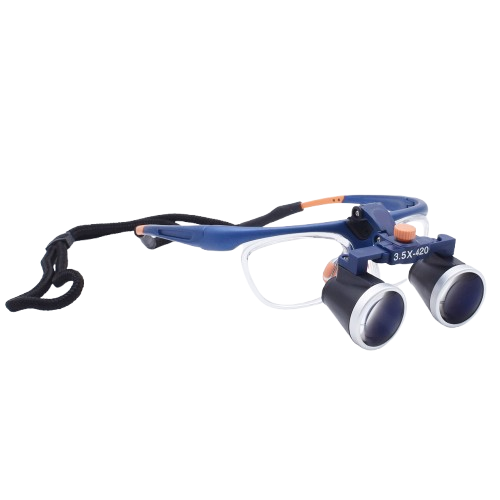
Why are dentists and microsurgeons adopting surgical loupes with light integration? For restorative work and implants, shadow-free visibility is non-negotiable. Compact units like the KD-205AY-1 allow for seamless integration with magnification loupes, providing a unified system for microsurgical acuity.
5. Surgical Headlamps vs. Traditional Overhead Lighting
Is it an “either/or” situation? Usually, it’s “both/and,” but the headlamp is winning on versatility. Let’s look at the comparison.

| Feature | Traditional Overhead Lights | LED Surgical Headlamps |
|---|---|---|
| Shadow Control | Prone to casting shadows from heads/hands | Shadow-free lighting (moves with the surgeon) |
| Mobility | Fixed installation, requires manual adjustment | Hands-free illumination, total mobility |
| Heat Generation | Can warm up the sterile field | Cool light (LED technology) |
| Depth of Field | Limited penetration in deep cavities | Excellent deep cavity illumination |
| Cost | High capital equipment cost | Lower cost, portable asset |
| Ergonomics | Requires reaching/stretching to adjust | Ergonomic surgical lights move naturally with head |
6. A Brief History: From Candles to LEDs
To understand the value of where we are, we have to look at where we came from. The journey to advanced surgical lighting has been long.
- 19th Century: Surgeons relied on sunlight (operating only at noon) and dangerous oil lamps.
- The Halogen Era: Brighter, but hot and yellow. The heat was often unbearable for surgeons during long cases.
- The Fiber Optic Tether: Better light, but the surgeon was “leashed” to the wall via a heavy cable.
- The LED Era (Now): The convergence of portability, power, and efficiency. We now have the power of a wall unit on a belt clip.
7. Buyer’s Guide: How to Choose the Right Surgical Headlamp
If you are sourcing medical headlamps for a hospital or distribution network, here is your checklist to ensure you are buying quality.
- Brightness & Lux: Don’t just look for the highest number; look for usable lux at working distance (usually 30-50cm).
- Battery Life: Does it last longer than your longest procedure? Look for >4 hours per battery, or systems that come with two batteries for “hot-swapping.”
- Comfort Fit: Can it be worn for 6 hours without a headache? Look for moisture-wicking padding and fully adjustable bands (crown and circumference).
- Spot Quality: Is the edge of the light crisp, or fuzzy? A crisp edge defines the surgical field better.
- Durability: Is the cable reinforced? Can the casing withstand wipes with harsh hospital-grade disinfectants?
8. Future Trends in Surgical Illumination
What’s next for healthcare technology in lighting?
- Integrated Cameras: Headlamps that record the surgery for teaching and liability purposes are becoming standard.
- Smart Sensors: Lights that auto-adjust brightness based on ambient conditions or the reflectivity of the tissue.
- AR Integration: Overlaying patient data directly into the light field—the future of advanced surgical lighting is augmented reality.

Conclusion
Upgrading to ergonomic, high-performance LED surgical headlamps isn’t just a purchase; it’s an investment in precision, safety, and the long-term health of your surgical teams. Whether you are performing minimally invasive procedures or complex neurosurgery, the right light changes everything.
Ready to see the difference? If you are looking for reliable, factory-direct medical lighting solutions that balance quality with cost-efficiency, check out our latest range of customizable surgical headlamps at Ary Medical. Let’s light up your OR.